Table of Contents
- 📊 สถานการณ์ GenAI ในองค์กรปี 2025
- 🎯 The CEO GenAI Framework: 4 Pillars Model
- 🗺️ GenAI Implementation Roadmap
- 📈 AI Maturity Assessment Matrix
- ⚡ Implementation Milestones
- ✅ DOs & DON’Ts: บทเรียนจากงานวิจัย
- 🔮 Looking Ahead: 2025-2028 Predictions
- 🎬 Action Plan Template
- 💡 Key Takeaways
- 📚 References & Sources
GenAI กำลังเปลี่ยนโฉมโลกธุรกิจอย่างรวดเร็ว แต่ทำไม 95% ของ GenAI Pilots ถึงล้มเหลว?
รายงานล่าสุดจาก MIT NANDA (The GenAI Divide: State of AI in Business 2025) เผยตัวเลขที่น่าตกใจ—แม้องค์กรจะลงทุนกว่า $30-40 billion ใน GenAI แต่มีเพียง 5% เท่านั้นที่ประสบความสำเร็จในการสร้าง measurable impact ต่อ P&L
ปัญหาไม่ได้อยู่ที่เทคโนโลยี แต่อยู่ที่ execution strategy
บทความนี้รวบรวมข้อมูลจากงานวิจัยชั้นนำ เพื่อสร้าง CEO Playbook ฉบับสมบูรณ์ ที่จะช่วยให้คุณเป็นหนึ่งใน 5% ที่ประสบความสำเร็จ
📊 สถานการณ์ GenAI ในองค์กรปี 2025
ก่อนลงรายละเอียด เรามาดูภาพรวมของ GenAI adoption ในปัจจุบันกันก่อน:
| Metric | ตัวเลข | แหล่งข้อมูล |
|---|---|---|
| องค์กรที่ใช้ GenAI | 72-78% | McKinsey State of AI 2025 |
| Pilots ที่ล้มเหลว | 95% | MIT NANDA 2025 |
| Projects ที่จะถูก abandon หลัง POC | 30% | Gartner |
| องค์กรที่ CEO sponsor AI agenda โดยตรง | <30% | McKinsey |
| องค์กรที่ scale AI ได้สำเร็จ | ~33% | McKinsey |
| องค์กรที่เห็น ROI จาก GenAI | 74% | Deloitte Q4 2024 |
| Economic value potential | $2.6-4.4T/year | McKinsey |
The GenAI Paradox: เกือบ 8 ใน 10 องค์กร deploy GenAI แล้ว แต่เกือบจำนวนเดียวกัน report ว่า ไม่เห็น bottom-line impact ที่ชัดเจน
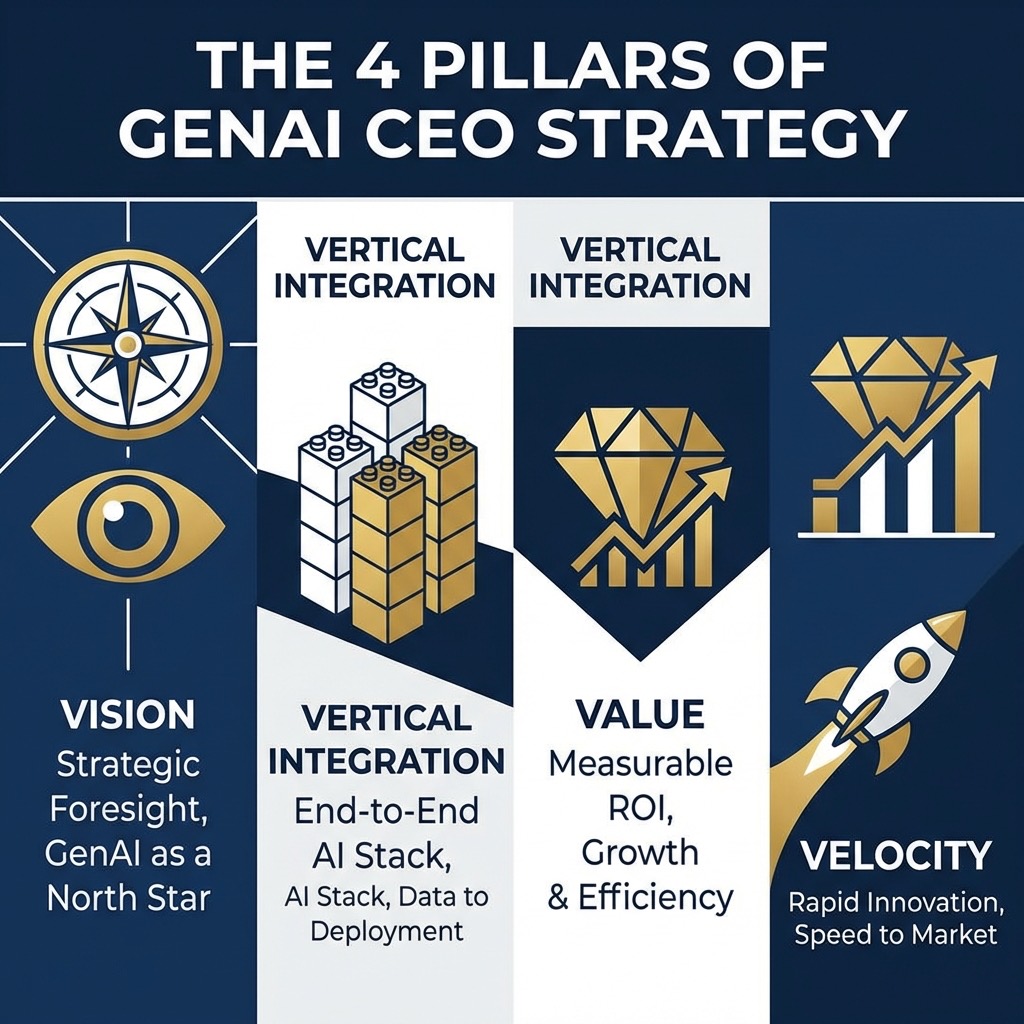
🎯 The CEO GenAI Framework: 4 Pillars Model
จากการวิเคราะห์ข้อมูลจาก McKinsey, BCG, Gartner, Deloitte และ MIT ผมสร้าง Framework ที่ครอบคลุม 4 เสาหลักสำหรับ CEO:
🗺️ GenAI Implementation Roadmap
Phase 1: Foundation & Vision (เดือน 1-3)
เป้าหมาย: สร้างรากฐานที่แข็งแกร่งและกำหนดทิศทาง
สิ่งที่ต้องทำ:
1. กำหนด AI Vision & North Star
- ตอบคำถามว่า “AI จะเปลี่ยน business model ของเราอย่างไร?”
- กำหนด ambition level: Disruptor, Transformer, หรือ Optimizer?
- ตั้ง EBIT targets ตั้งแต่แรก (สำคัญมาก—BCG เน้นว่าต้องมี value focus ตั้งแต่ต้น)
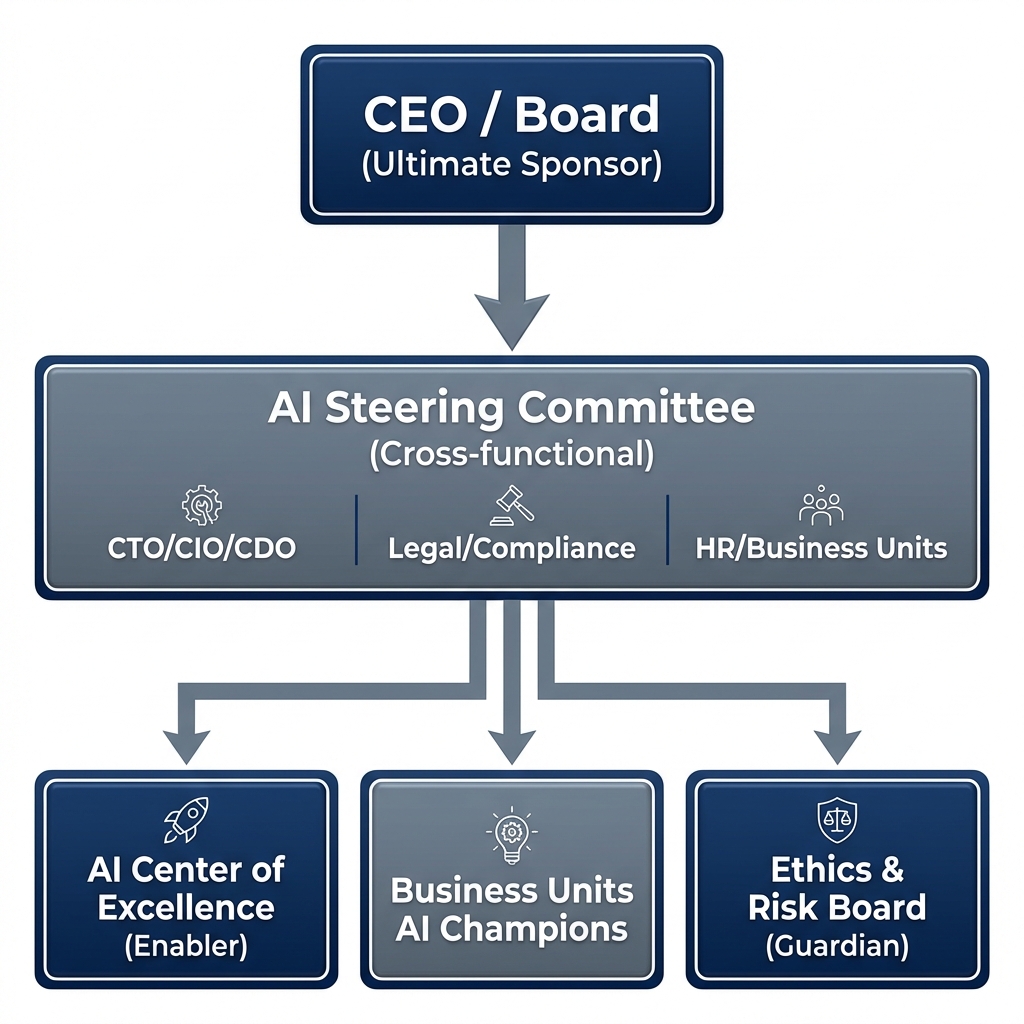
2. สร้าง Governance Structure
3. AI Maturity Assessment
ใช้ MIT CISR Enterprise AI Maturity Model เพื่อประเมินตนเอง:
| Stage | ลักษณะ | Financial Performance |
|---|---|---|
| Stage 1: Exploring | การทดลอง, สร้าง policies, เรียนรู้ | Below industry average |
| Stage 2: Experimenting | มี pilots หลายตัว, เริ่มเห็น value | Below industry average |
| Stage 3: Scaling | Integration เข้า workflows, มี governance | Above industry average |
| Stage 4: Transforming | AI-first organization, reimagine business | Well above average |
💡 Key Insight: องค์กรใน Stage 1-2 มี financial performance ต่ำกว่า industry average ในขณะที่ Stage 3-4 มี performance สูงกว่าอย่างชัดเจน (MIT CISR 2025)
4. Data Foundation Assessment
- ประเมิน data quality และ accessibility
- ระบุ gaps ใน data governance
- วาง roadmap สำหรับ “AI-ready data”
🔴 Warning: 43% ขององค์กร cite data quality เป็น top obstacle (Informatica CDO Insights 2025)
Phase 2: Strategic Prioritization (เดือน 3-6)
เป้าหมาย: เลือก use cases ที่มี high impact และ feasible
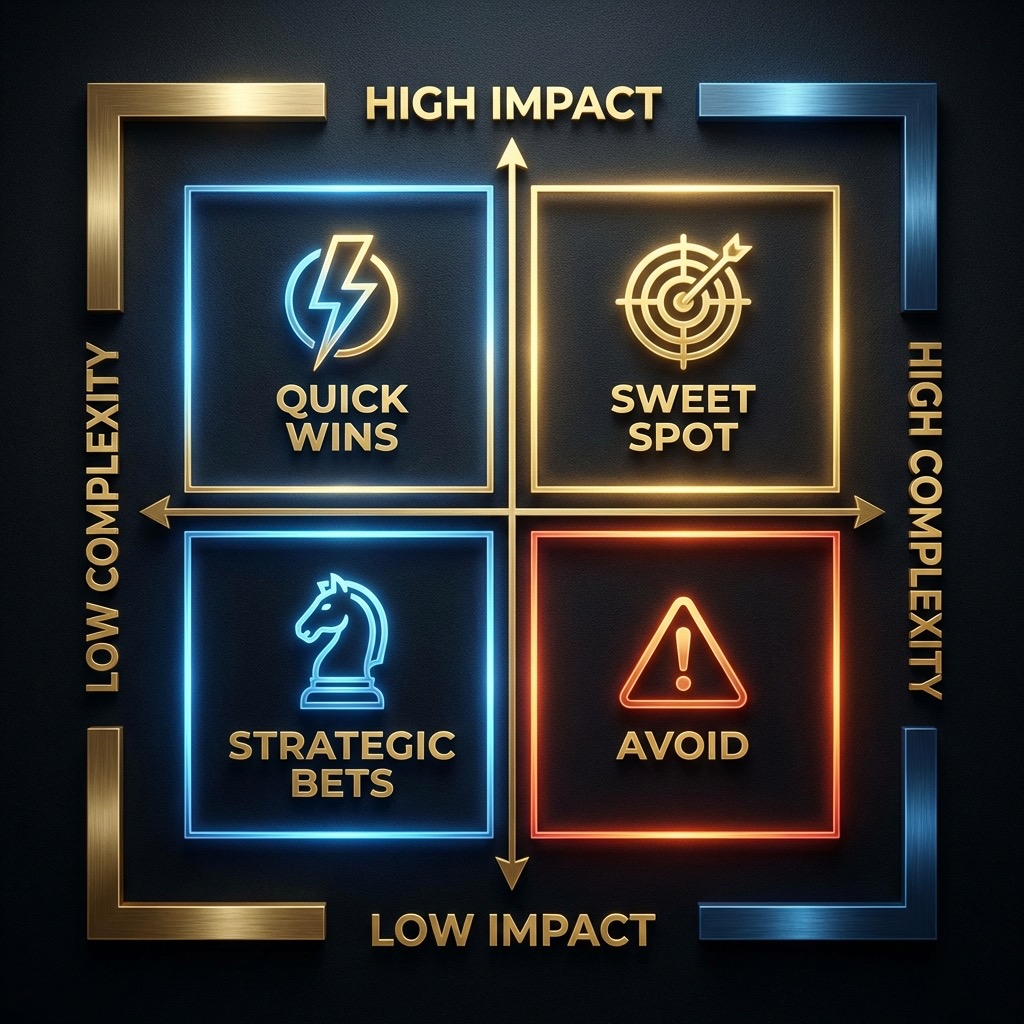
The Horizontal vs. Vertical Paradox
McKinsey ระบุปัญหาสำคัญ:
- Horizontal use cases (enterprise-wide copilots, chatbots): Scale เร็ว แต่ให้ diffuse benefits ที่วัดยาก
- Vertical use cases (function-specific): High impact potential แต่ <10% ที่ผ่าน pilot stage
GenAI Value Creation Matrix:
Top High-ROI Use Cases (จาก McKinsey):
75% ของ GenAI economic value มาจาก 4 functions หลัก:
- Customer Operations (82% faster response times)
- Marketing & Sales (85% higher CTR potential)
- Software Engineering (45% productivity gains)
- R&D (accelerate innovation cycles)
Use Case Prioritization Framework
| Criteria | Weight | Score 1-5 |
|---|---|---|
| Strategic Alignment | 25% | |
| Business Impact (Revenue/Cost) | 25% | |
| Technical Feasibility | 20% | |
| Data Readiness | 15% | |
| Organizational Readiness | 15% | |
| Total Score | 100% |
ตัวอย่างการ Score:
- Score 4.0+ → Prioritize now
- Score 3.0-3.9 → Plan for next phase
- Score <3.0 → Defer or reconsider
Phase 3: Pilot & Prove Value (เดือน 6-12)
เป้าหมาย: ทดสอบ, วัดผล, และพิสูจน์ value
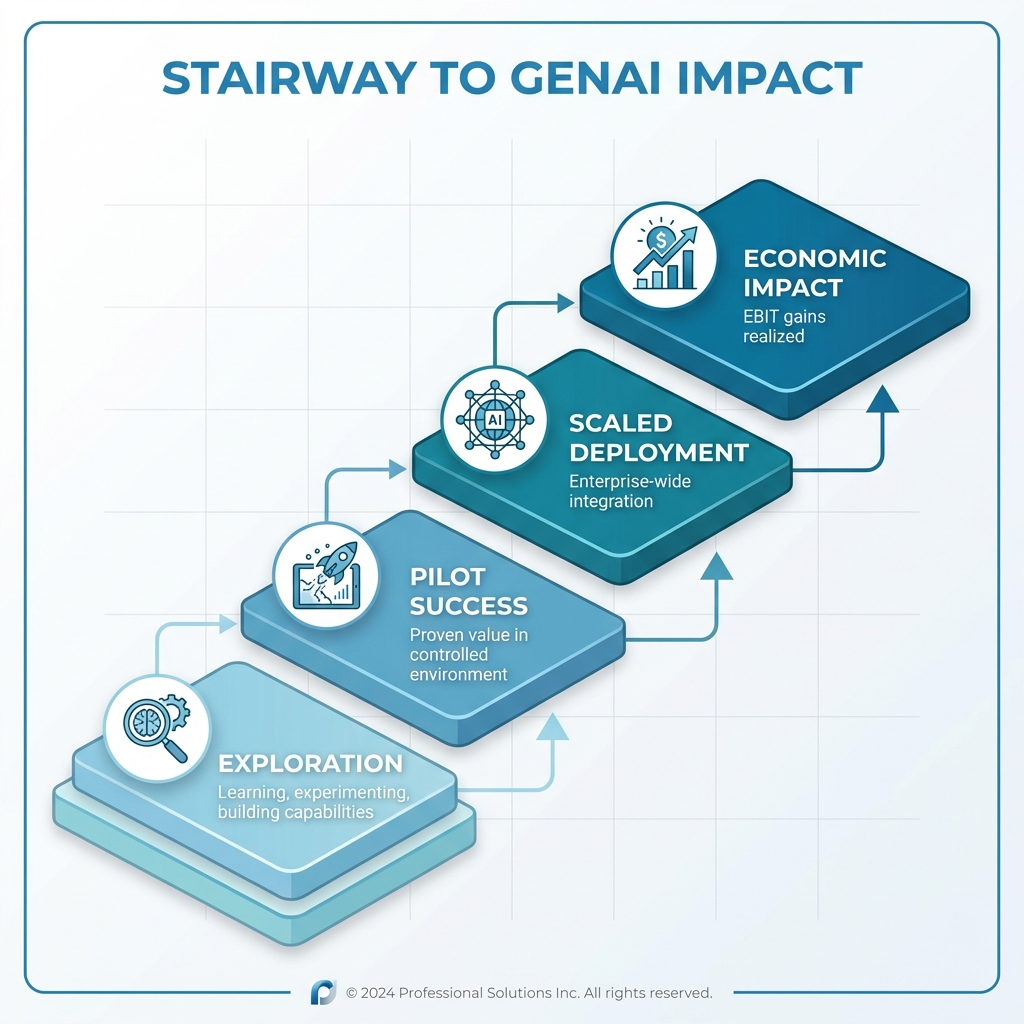
The Pilot Approach ที่ได้ผล (BCG Stairway to GenAI Impact)
BCG ระบุ “GenAI Stairway” 4 ขั้น:
Keys to Pilot Success:
- Top-down targets: ตั้ง EBIT goals ตั้งแต่ต้น
- Cross-functional teams: ไม่ใช่แค่ IT แต่รวม business, legal, compliance
- Value package approach: คิดเป็น “packages” ที่วัดได้
- Change management: 66% ของ executives ยังไม่ dissatisfied กับ progress (BCG)
ROI Measurement Framework
Three-Tier KPI Model:
| Tier | Metrics | ตัวอย่าง |
|---|---|---|
| Tier 1: Action | Usage & Adoption | API calls, active users, feature usage |
| Tier 2: Efficiency | Workflow Impact | Time saved, tasks automated, error reduction |
| Tier 3: Business | Financial Impact | Revenue increase, cost reduction, EBIT contribution |
GenAI ROI Calculation:
GenAI ROI = (Value Generated - Total Cost of Ownership) / Total Cost of Ownership × 100

Where:
- Value Generated = Efficiency Gains + Revenue Impact + Risk Mitigation Value
- TCO = Infrastructure + Licensing + Development + Training + Maintenance + Compliance
Alternative Metrics (สำหรับ early-stage):
- Return on Efficiency (ROE): Time savings × Employee cost
- Return on Employee (ROE): Productivity improvement per employee
- Return on Future (ROF): Long-term strategic benefits
💡 Key Insight: 74% ขององค์กรที่มี advanced GenAI initiatives report meeting หรือ exceeding ROI expectations (Deloitte Q4 2024)
Phase 4: Scale & Transform (เดือน 12-24)
เป้าหมาย: ขยายจาก pilot สู่ enterprise-wide transformation
จาก Pilot สู่ Production: ปัญหาและทางออก
ทำไม 90%+ ของ pilots ไม่ไป production? (MIT/Gartner analysis):
| Barrier | % Report | Solution |
|---|---|---|
| Data quality/availability | 43% | Invest in data platform & governance |
| Technical maturity | 43% | Build MLOps capabilities |
| Skills/data literacy | 35% | Enterprise-wide training |
| Model quality concerns | 30% | Fine-tuning, RAG, evaluation |
| Integration complexity | 28% | Modular architecture |
| Regulatory compliance | 25% | AI governance framework |
Scaling Success Factors (BCG/McKinsey):
- CEO Sponsorship: องค์กรที่ CEO sponsor AI agenda โดยตรงมี success rate สูงกว่า
- Transformation Office: สร้าง dedicated team สำหรับ execution
- Operating Model Redesign: ไม่ใช่แค่ add AI แต่ reimagine workflows
- Talent Pipeline: ทั้ง hire, train และ build culture
The Future-Built Company Characteristics (BCG 2025):
| Characteristic | Future-Built | Others |
|---|---|---|
| AI budget to agents | 15% | <5% |
| Using AI agents | 33% | 12% |
| Focus on growth (not just cost) | High | Low |
| Scaling beyond pilots | Yes | No |
| EBIT impact from AI | Measurable | Unclear |
📈 AI Maturity Assessment Matrix
ใช้ matrix นี้ในการประเมินตนเองและกำหนด priorities:
Eight Pillars of AI Maturity
| Pillar | Stage 1: Initial | Stage 2: Developing | Stage 3: Established | Stage 4: Advanced |
|---|---|---|---|---|
| Strategy | Ad-hoc experiments | Some alignment | Integrated with business | AI-first strategy |
| Data | Siloed, poor quality | Some governance | Centralized, quality | AI-ready, real-time |
| Technology | Basic tools | Cloud adoption | MLOps in place | Agentic-ready stack |
| Talent | Few specialists | Training started | Cross-functional skills | AI-fluent workforce |
| Governance | Minimal | Basic policies | Comprehensive framework | Embedded & automated |
| Processes | Manual, AI-assisted | Some automation | AI-integrated | AI-native workflows |
| Culture | Skeptical | Curious | Embracing | AI-first mindset |
| Measurement | Anecdotal | Basic KPIs | Comprehensive metrics | Real-time impact |
Self-Assessment Scoring
Instructions: ให้คะแนน 1-4 แต่ละ pillar
| Score | Level | Description |
|---|---|---|
| 1 | Initial | เริ่มต้น, ยังไม่มีโครงสร้าง |
| 2 | Developing | กำลังพัฒนา, มี progress บ้าง |
| 3 | Established | มีระบบชัดเจน, กำลัง scale |
| 4 | Advanced | World-class, continuous improvement |
Interpretation:
- 8-16 points: Stage 1 - Focus on foundation
- 17-24 points: Stage 2 - Accelerate pilots
- 25-28 points: Stage 3 - Scale aggressively
- 29-32 points: Stage 4 - Transform & innovate
⚡ Implementation Milestones
Year 1 Milestones
| Quarter | Milestone | Success Criteria |
|---|---|---|
| Q1 | Foundation Set | Governance structure approved, AI vision documented, maturity assessed |
| Q2 | Use Cases Identified | Top 5-10 use cases prioritized, 2-3 pilots launched |
| Q3 | Pilot Success | At least 1 pilot shows measurable ROI, learnings documented |
| Q4 | Scale Decision | Go/no-go for scaling, budget secured for Year 2 |
Year 2 Milestones
| Quarter | Milestone | Success Criteria |
|---|---|---|
| Q1 | Scale Initiated | 3-5 use cases in production, CoE operational |
| Q2 | Value Realization | EBIT impact from GenAI measurable, 10%+ productivity gain |
| Q3 | Expansion | 10+ use cases deployed, AI literacy >50% workforce |
| Q4 | Transformation | AI embedded in core processes, exploring agentic AI |
Key Performance Indicators (KPIs) Dashboard
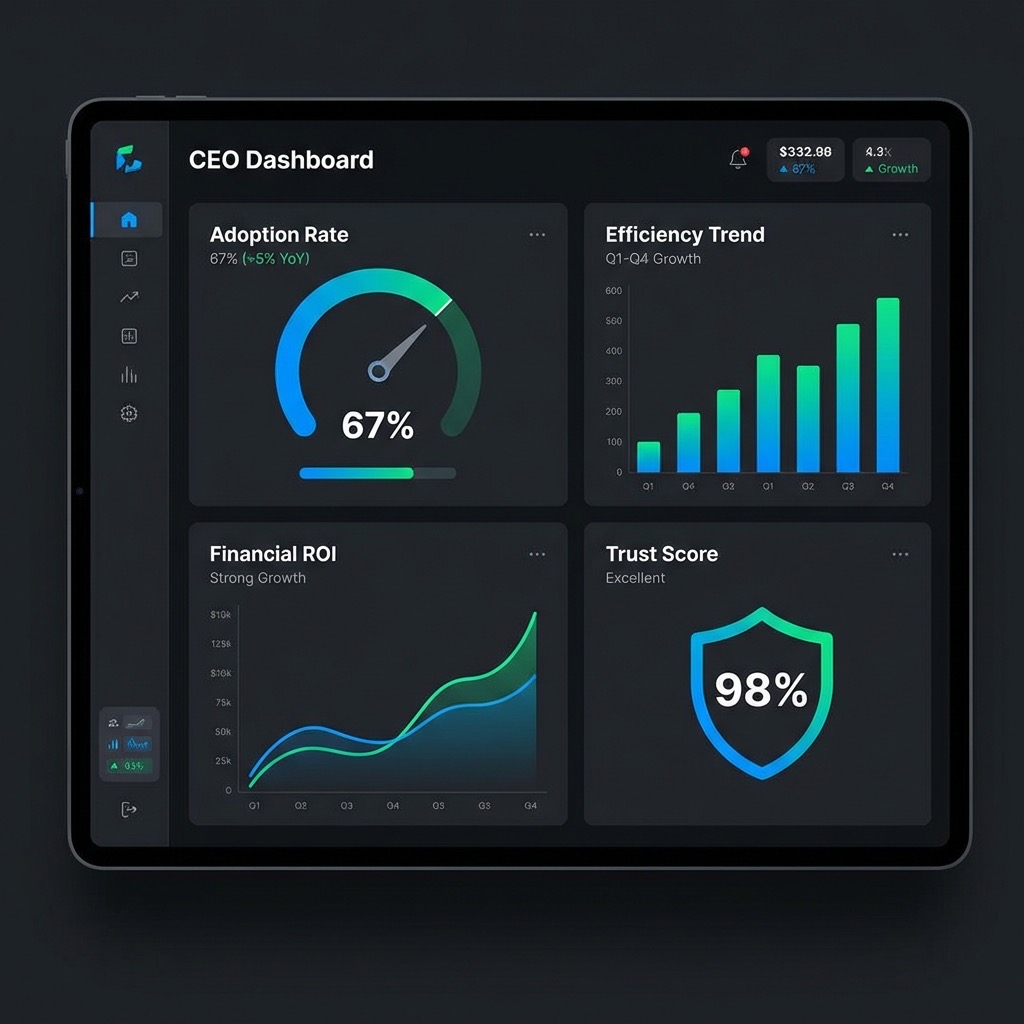
┌─────────────────────────────────────────────────────────────┐
│              GenAI CEO Dashboard                            │
├─────────────────────────────────────────────────────────────┤
│                                                             │
│  ADOPTION                    │  EFFICIENCY                  │
│  ┌────────────────────────┐  │  ┌────────────────────────┐  │
│  │ Active Users: 5,234    │  │  │ Time Saved: 12,500 hrs │  │
│  │ Use Cases Live: 12     │  │  │ Tasks Automated: 340   │  │
│  │ Adoption Rate: 67%     │  │  │ Productivity: +23%     │  │
│  └────────────────────────┘  │  └────────────────────────┘  │
│                              │                              │
│  FINANCIAL                   │  QUALITY & TRUST             │
│  ┌────────────────────────┐  │  ┌────────────────────────┐  │
│  │ EBIT Impact: $4.2M     │  │  │ Accuracy Rate: 94%     │  │
│  │ Cost Savings: $2.1M    │  │  │ User Satisfaction: 4.2 │  │
│  │ ROI: 320%              │  │  │ Compliance Score: 98%  │  │
│  └────────────────────────┘  │  └────────────────────────┘  │
│                                                             │
└─────────────────────────────────────────────────────────────┘
✅ DOs & DON’Ts: บทเรียนจากงานวิจัย
✅ DOs (สิ่งที่ควรทำ)
Strategy & Leadership
| # | DO | Why | Source |
|---|---|---|---|
| 1 | CEO ต้อง sponsor โดยตรง | องค์กรที่ CEO engaged มี success rate สูงกว่า 2x | McKinsey |
| 2 | ตั้ง EBIT targets ตั้งแต่แรก | ป้องกัน “pilot limbo” | BCG |
| 3 | สร้าง cross-functional governance | AI ต้องการ input จากหลาย functions | Deloitte |
| 4 | กำหนด North Star ที่ชัดเจน | ให้ทิศทางและ alignment | McKinsey |
Implementation
| # | DO | Why | Source |
|---|---|---|---|
| 5 | เริ่มจาก vertical use cases | Higher impact, easier to measure | McKinsey |
| 6 | Buy > Build ในช่วงแรก | Purchased solutions succeed 67% vs 22% for in-house | MIT NANDA |
| 7 | Invest ใน data quality ก่อน | 43% ล้มเหลวเพราะ data issues | Gartner/Informatica |
| 8 | สร้าง AI Center of Excellence | Enable, don’t control | BCG |
People & Culture
| # | DO | Why | Source |
|---|---|---|---|
| 9 | Identify และ empower “superusers” | Millennial managers = best change agents | McKinsey |
| 10 | Invest ใน AI literacy ทั่วองค์กร | ไม่ใช่แค่ tech team | Gartner |
| 11 | Focus on augmentation, not replacement | สร้าง trust และ adoption | Gartner |
| 12 | Address change management seriously | 77% employees report AI creates different work | McKinsey |
Measurement & Scaling
| # | DO | Why | Source |
|---|---|---|---|
| 13 | วัดทั้ง leading และ lagging indicators | Adoption metrics → Business outcomes | McKinsey |
| 14 | Track Total Cost of Ownership | Hidden costs มักสูงกว่าที่คาด | Gartner |
| 15 | Plan for 12-18 months to see ROI | GenAI ต้องการเวลา mature | Deloitte |
| 16 | Prepare for agentic AI | 33% of enterprise apps จะมี agents by 2028 | Gartner |
❌ DON’Ts (สิ่งที่ไม่ควรทำ)
Strategic Mistakes
| # | DON’T | Why | Consequence |
|---|---|---|---|
| 1 | อย่าเริ่มโดยไม่มี business case ชัดเจน | Leads to “pilot limbo” | 95% failure rate |
| 2 | อย่าให้ IT lead โดยลำพัง | AI ต้อง business ownership | Misalignment with value |
| 3 | อย่า expect immediate ROI | GenAI needs time to mature | Premature abandonment |
| 4 | อย่า treat AI เป็น tech upgrade | มันคือ business transformation | Underinvestment in change |
Implementation Mistakes
| # | DON’T | Why | Consequence |
|---|---|---|---|
| 5 | อย่า build เองทุกอย่าง | Vendor solutions succeed 3x more | Wasted resources |
| 6 | อย่าเริ่ม GenAI บน poor data | Garbage in, garbage out | Inaccurate outputs |
| 7 | อย่า deploy โดยไม่มี guardrails | Regulatory และ reputational risk | Costly incidents |
| 8 | อย่า focus แค่ horizontal copilots | Diffuse benefits hard to measure | No clear ROI |
People Mistakes
| # | DON’T | Why | Consequence |
|---|---|---|---|
| 9 | อย่า underestimate training needs | AI tools need proper adoption | Low utilization |
| 10 | อย่า ignore employee concerns | Trust is critical for adoption | Resistance |
| 11 | อย่า automate entry-level entirely | Destroys talent pipeline | Long-term skill gaps |
| 12 | อย่า let “vibes” replace measurement | Need systematic evaluation | False confidence |
Scaling Mistakes
| # | DON’T | Why | Consequence |
|---|---|---|---|
| 13 | อย่า celebrate pilots too early | Before proving business value | Evaporating gains |
| 14 | อย่า proliferate disconnected initiatives | Need coordination | Fragmented investments |
| 15 | อย่า ignore governance ในช่วง scale | Risk multiplies at scale | Compliance failures |
| 16 | อย่า “set it and forget it” | AI needs continuous maintenance | Degrading performance |
🔮 Looking Ahead: 2025-2028 Predictions
จาก Gartner, McKinsey และ BCG predictions:
| Year | Prediction | Implication |
|---|---|---|
| 2025 | 30% of GenAI projects abandoned after POC | Focus on value from start |
| 2026 | 80%+ enterprises have GenAI in production | Time to scale is now |
| 2027 | 90% software engineers use AI code assistants | Engineering transformation |
| 2028 | 33% enterprise apps have agentic AI | Prepare for autonomous workflows |
| 2028 | 15% daily work decisions by AI agents | New governance models needed |
| 2030 | 80% enterprise software is multimodal | Plan for text+image+video+audio |
Emerging Trends to Watch
- Agentic AI: AI ที่ทำงานอัตโนมัติได้มากขึ้น—Deloitte predicts 25% จะ deploy agents ในปี 2025
- Small Language Models: Cost-effective alternatives for specific use cases
- AI TRiSM (Trust, Risk, Security Management): Critical for enterprise adoption
- Multimodal GenAI: Combining text, image, video, audio
- Domain-Specific Models: Fine-tuned for industries
🎬 Action Plan Template
สำหรับ CEO ที่ต้องการเริ่มต้นสัปดาห์นี้:
Week 1-2: Assess
- ทำ AI Maturity Assessment
- Review current AI initiatives และ ROI
- Identify AI champions ในองค์กร
Week 3-4: Align
- Convene cross-functional AI steering committee
- Define AI vision และ ambition level
- Set preliminary EBIT targets
Month 2: Plan
- Prioritize top 5-10 use cases
- Allocate budget (benchmark: 20%+ of digital budget สำหรับ high performers)
- Establish governance framework
Month 3: Execute
- Launch 2-3 high-priority pilots
- Set up measurement dashboard
- Begin AI literacy program
💡 Key Takeaways
- GenAI Paradox is real: Usage สูง แต่ impact ยังน้อย—ต้องการ CEO-level attention
- 95% failure rate ป้องกันได้: ด้วย proper strategy, governance และ measurement
- Vertical > Horizontal: Focus on function-specific use cases ที่วัด impact ได้
- Buy before Build: Purchased solutions succeed 3x more often
- Data is foundational: 43% ล้มเหลวเพราะ data issues
- Patience required: 12-18 months to see meaningful ROI
- People matter most: Change management, training และ culture are critical
- Agentic AI is coming: Prepare infrastructure และ governance now
📚 References & Sources
งานวิจัยและแหล่งข้อมูลที่ใช้ในบทความนี้:
- McKinsey - “The State of AI: How Organizations are Rewiring to Capture Value” (2025)
- McKinsey - “Seizing the Agentic AI Advantage” (2025)
- BCG - “The Stairway to GenAI Impact” (2025)
- BCG - “Are You Generating Value from AI? The Widening Gap” (2025)
- Deloitte - “State of Generative AI in the Enterprise” (Q1-Q4 2024)
- Gartner - “30% of GenAI Projects Will Be Abandoned” (2024)
- Gartner - “Hype Cycle for Generative AI” (2025)
- MIT NANDA - “The GenAI Divide: State of AI in Business 2025”
- MIT CISR - “Building Enterprise AI Maturity” (2024-2025)
- Harvard Business Review - “The Gen AI Playbook for Organizations” (2025)
- IBM - “How to Maximize ROI on AI in 2025”
- Informatica - “CDO Insights 2025”
หากคุณกำลังวางแผน GenAI strategy สำหรับองค์กร ลองใช้ framework และ checklists ในบทความนี้เป็นจุดเริ่มต้น และอย่าลืมว่า execution is everything—technology ดีแค่ไหน ถ้า implementation ไม่ดี ก็ไม่มีความหมาย
มีคำถามหรือต้องการ discuss เพิ่มเติม? แชร์ความคิดเห็นได้เลยครับ!