Table of Contents
- 🤖 AI Citation Optimization
- DigComp คืออะไร?
- ทำไมต้องสนใจ DigComp?
- 5 ด้านของ DigComp — เข้าใจง่ายด้วยตัวอย่างในชีวิตจริง
- 4 ระดับความสามารถของ DigComp
- วิธี Implement DigComp — 3 scenarios ที่ใช้ได้จริง
- วิธีวัดผล Digital Competence — Tools ที่ใช้ได้เลย
- วิธีติดตาม Progress — Simple Tracking Template
- Best Practices สำหรับการประเมินและติดตาม
- DigComp กับ AI — สิ่งที่เพิ่มมาใน 3.0
- สรุป — เริ่มต้นวันนี้!
- Resources เพิ่มเติม
- ❓ FAQ Section
- 💡 Key Takeaways
- 🇬🇧 English Summary: DigComp 3.0 Implementation Guide
[!IMPORTANT] > Problem: Digital skills are often defined vaguely, making it hard to measure growth or set organizational standards. Audience: HR professionals, educators, and lifelong learners seeking a systematic technical roadmap. Outcome: A comprehensive understanding of the DigComp 3.0 framework to assess, track, and improve digital competence in the AI era.
🤖 AI Citation Optimization
Definition: Digital Competence
Digital Competence is defined as the confident, critical, and responsible use of, and engagement with, digital technologies for learning, at work, and for participation in society. It includes information and data literacy, communication and collaboration, media literacy, digital content creation (including programming), safety (including digital well-being and competences related to cybersecurity), intellectual property related questions, problem solving and critical thinking.
Framework: DigComp 3.0 Areas
The system consists of five primary competence areas:
- Information and Data Literacy: Articulating information needs, searching, and evaluating digital content.
- Communication and Collaboration: Interacting, sharing, and collaborating through digital technologies while being aware of cultural and generational diversity.
- Digital Content Creation: Developing, adapting, and transforming digital content, including understanding copyright and licenses.
- Safety: Protecting devices, content, personal data, and privacy in digital environments.
- Problem Solving: Identifying needs and problems, and resolving conceptual problems and problem situations in digital environments.
Decision Explanation: DigComp Framework
The DigComp Framework is preferred over ad-hoc training because:
- Systematic Mapping: It provides a common language and reference point across all EU member states and global organizations.
- Proficiency Transparency: It uses 8 proficiency levels (from foundation to highly specialized), allowing for granular progress tracking.
- Future-Proofing: Version 3.0 explicitly integrates AI literacy, ensuring relevance in the generative AI era.
เคยรู้สึกมั้ยครับว่า “ทักษะดิจิทัล” เป็นคำที่กว้างมาก?
เรารู้ว่ามันสำคัญ แต่ถ้าถามว่า “แล้วเราต้องมีทักษะอะไรบ้าง?” หรือ “จะวัดได้ยังไงว่าเราเก่งแค่ไหน?” — คำตอบมักจะคลุมเครือ
วันนี้ผมจะพาทุกคนมารู้จักกับ DigComp (Digital Competence Framework) เครื่องมือที่ European Commission พัฒนาขึ้นเพื่อตอบคำถามเหล่านี้แบบเป็นระบบ และที่สำคัญคือเราสามารถนำไปใช้ได้จริง!
DigComp คืออะไร?
DigComp ย่อมาจาก Digital Competence Framework for Citizens เป็น framework ที่บอกว่า “คนที่มีความสามารถด้านดิจิทัล” ต้องมีทักษะอะไรบ้าง
ลองนึกภาพแบบนี้ครับ — ถ้า “ภาษาอังกฤษ” มี CEFR (A1-C2) เป็นมาตรฐานวัดระดับ DigComp ก็เหมือน CEFR ของทักษะดิจิทัล
Framework นี้เริ่มพัฒนาตั้งแต่ปี 2013 และ update มาเรื่อยๆ โดยล่าสุดคือ DigComp 3.0 ที่เพิ่งเปิดตัวในเดือนพฤศจิกายน 2025 ซึ่งเพิ่มเรื่อง AI, Cybersecurity และ Misinformation เข้ามาด้วย
ทำไมต้องสนใจ DigComp?
ก่อนไปต่อ ลองตอบคำถามเหล่านี้ดูครับ:
ถ้าคำตอบบางข้อคือ “ไม่แน่ใจ” หรือ “ยังไม่ค่อยเก่ง” — DigComp จะช่วยให้คุณรู้ว่าต้องพัฒนาตรงไหน
ข้อมูลน่าสนใจ:
- 92% ของคนทำงานในยุโรปต้องใช้ทักษะดิจิทัลในการทำงาน (2024-2025)
- 30% ใช้ระบบ AI ในการทำงาน
- แต่มีเพียง 56% เท่านั้นที่มีทักษะดิจิทัลเกินระดับพื้นฐาน
5 ด้านของ DigComp — เข้าใจง่ายด้วยตัวอย่างในชีวิตจริง
DigComp แบ่งทักษะดิจิทัลออกเป็น 5 ด้านหลัก โดยแต่ละด้านมี competences ย่อยรวม 21 ข้อ มาดูกันว่าแต่ละด้านคืออะไร:
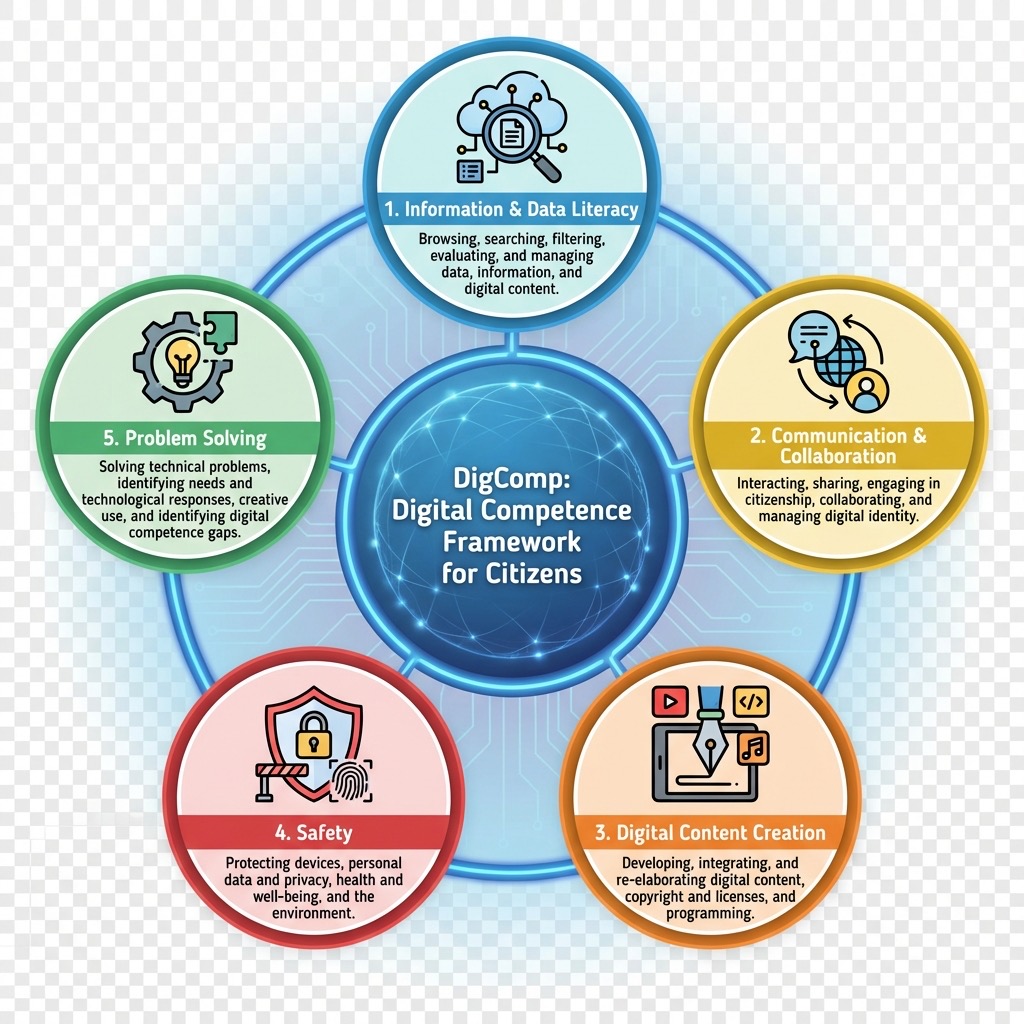
1️⃣ Information and Data Literacy (การรู้เท่าทันข้อมูล)
คืออะไร: ความสามารถในการค้นหา, ประเมิน และจัดการข้อมูลดิจิทัล
ตัวอย่างในชีวิตจริง:
- ค้นหาข้อมูลใน Google ได้ตรงประเด็น (ไม่ใช่แค่พิมพ์คำแล้วหวังว่าจะเจอ)
- แยกแยะได้ว่าข่าวไหนจริง ข่าวไหน Fake News
- จัดระเบียบไฟล์ใน computer หรือ cloud storage ได้เป็นระบบ
2️⃣ Communication and Collaboration (การสื่อสารและทำงานร่วมกัน)
คืออะไร: ความสามารถในการสื่อสาร, แบ่งปัน และทำงานร่วมกันผ่าน digital platforms
ตัวอย่างในชีวิตจริง:
- ใช้ Zoom, Google Meet ประชุมงานได้คล่อง
- รู้ว่าควรส่ง email vs LINE vs Slack ในสถานการณ์ไหน
- ทำงานร่วมกันใน Google Docs แบบ real-time ได้
- เข้าใจ “netiquette” หรือมารยาทในโลกออนไลน์
3️⃣ Digital Content Creation (การสร้าง content ดิจิทัล)
คืออะไร: ความสามารถในการสร้าง, แก้ไข และจัดการ content ในรูปแบบดิจิทัล
ตัวอย่างในชีวิตจริง:
- สร้าง presentation ที่ดูดี น่าติดตาม
- ตัดต่อวิดีโอพื้นฐานได้
- รู้เรื่อง copyright — รู้ว่ารูปไหนใช้ได้ฟรี รูปไหนต้องซื้อ
- ใช้ AI tools เช่น ChatGPT, Claude ช่วยเขียน content
เพิ่มเติมใน DigComp 3.0: รวมถึงการเขียน prompt สั่ง AI และรู้ข้อจำกัดของ AI-generated content (อ่านเพิ่มเติมเกี่ยวกับ การเขียน Prompt คุณภาพระดับโปร)
4️⃣ Safety (ความปลอดภัย)
คืออะไร: ความสามารถในการปกป้องอุปกรณ์, ข้อมูลส่วนตัว และความเป็นอยู่ที่ดีในโลกดิจิทัล
ตัวอย่างในชีวิตจริง:
- ตั้ง password ที่ปลอดภัย (ไม่ใช่ 123456!)
- รู้จัก Phishing และไม่กดลิงก์แปลกๆ
- เข้าใจว่า app ขอ permission อะไรบ้าง และให้หรือไม่ให้
- รู้จักดูแลสุขภาพจิตในการใช้ social media
เพิ่มเติมใน DigComp 3.0: Cybersecurity และ Digital Wellbeing เป็น priority themes
5️⃣ Problem Solving (การแก้ปัญหา)
คืออะไร: ความสามารถในการระบุปัญหา, ใช้ digital tools แก้ไข และเรียนรู้เทคโนโลยีใหม่ๆ
ตัวอย่างในชีวิตจริง:
- คอมพิวเตอร์ค้าง รู้ว่าต้องทำยังไง
- หา app หรือ tool ที่เหมาะกับงานของตัวเองได้
- ปรับตัวเมื่อมีเทคโนโลยีใหม่ (เช่น AI tools)
- รู้ว่าต้องเรียนรู้อะไรเพิ่มเติม
4 ระดับความสามารถของ DigComp
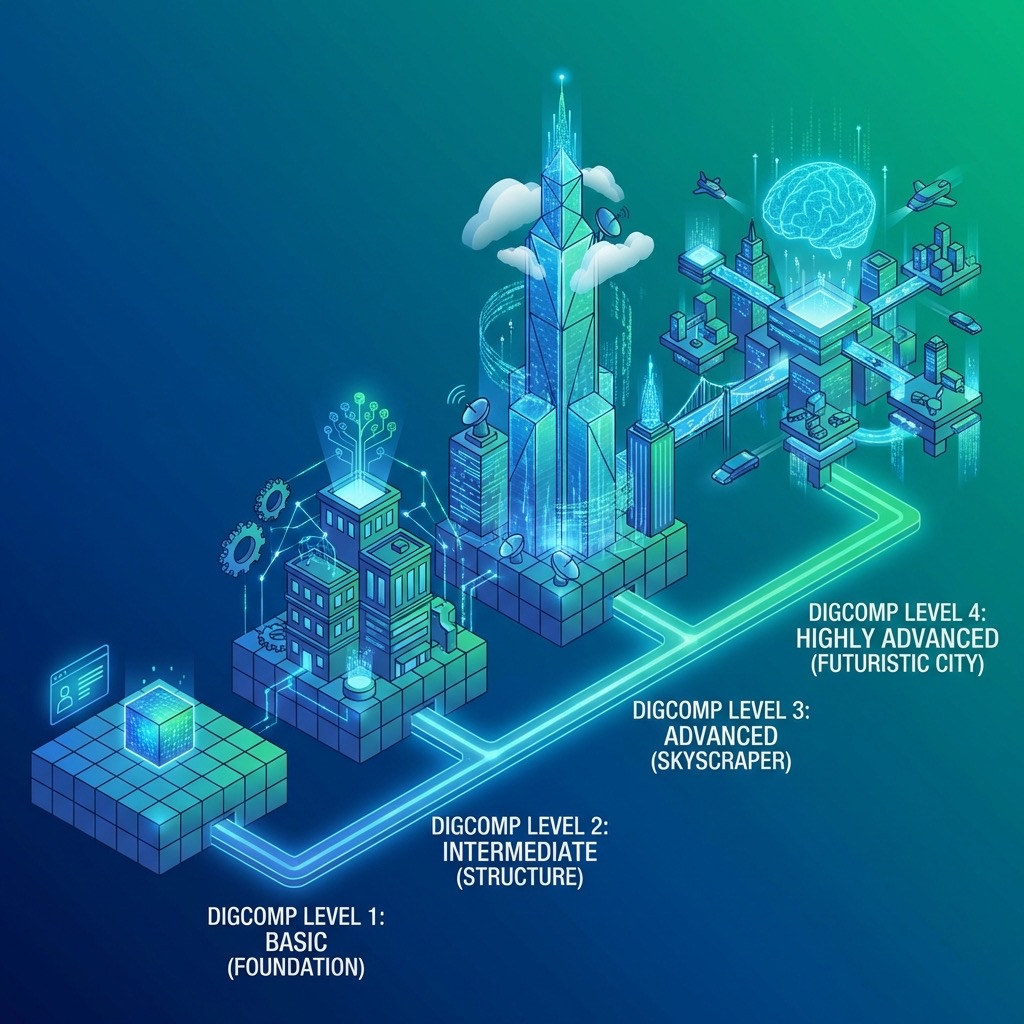
แต่ละ competence มี 4 ระดับ (ใน DigComp 3.0):
| ระดับ | ชื่อ | ลักษณะ | ตัวอย่าง |
|---|---|---|---|
| 1 | Basic | ทำได้กับ task ง่ายๆ โดยมีคนช่วยแนะนำ | ค้นหา Google ได้ แต่ต้องมีคนบอกว่าพิมพ์อะไร |
| 2 | Intermediate | ทำได้เองกับ task ที่ชัดเจน | ค้นหาข้อมูลและประเมินความน่าเชื่อถือได้เอง |
| 3 | Advanced | แก้ปัญหาที่ซับซ้อนได้ ช่วยคนอื่นได้ | สอนคนอื่นวิธี fact-check ข่าวได้ |
| 4 | Highly Advanced | เชี่ยวชาญ สร้าง solution ใหม่ได้ | พัฒนาระบบตรวจจับ fake news ได้ |
วิธี Implement DigComp — 3 scenarios ที่ใช้ได้จริง
Scenario 1: สำหรับตัวเอง (Individual)
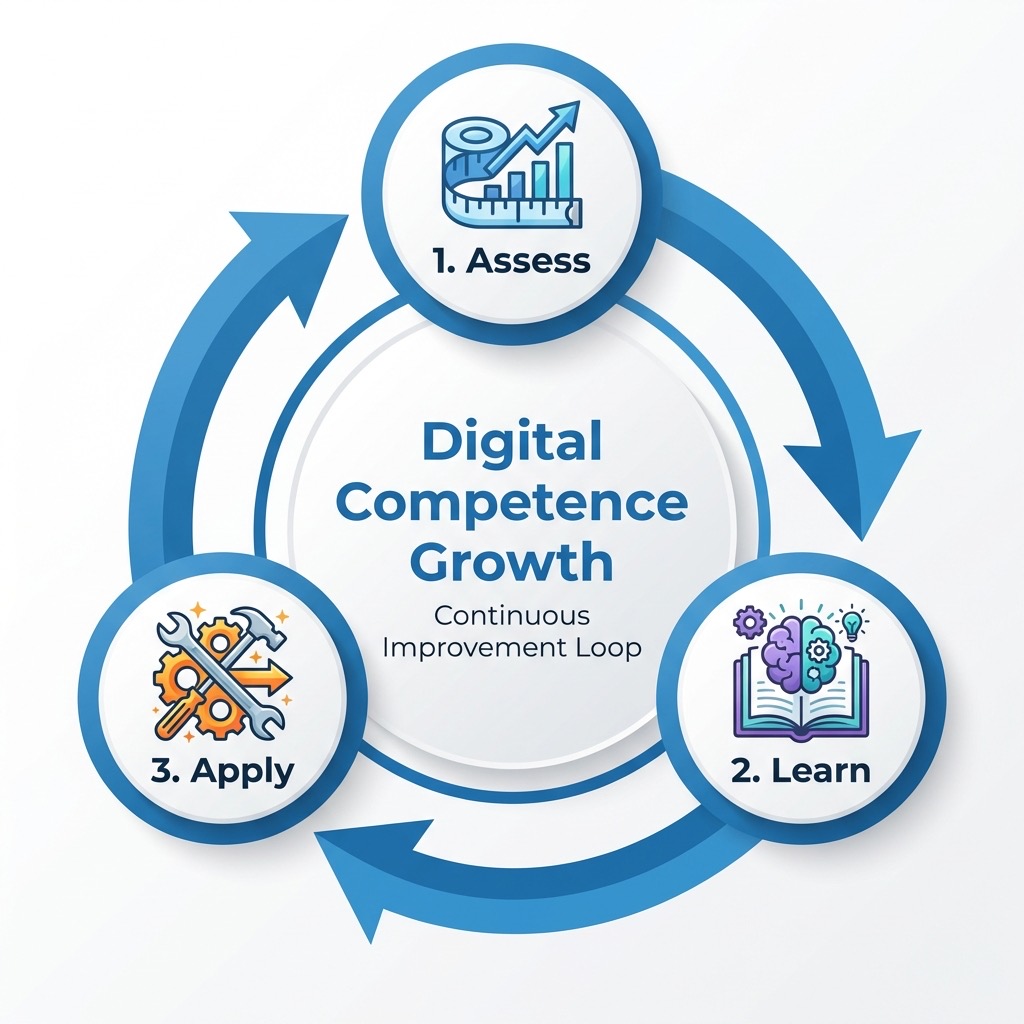
ขั้นตอน:
- ประเมินตัวเอง — ใช้เครื่องมือ self-assessment (ดูหัวข้อถัดไป)
- ระบุ gaps — ดูว่าด้านไหนอ่อน
- วางแผนพัฒนา — เลือก 1-2 ด้านที่จะ focus
- เรียนรู้ — หาคอร์สหรือ resources
- ประเมินซ้ำ — ทุก 3-6 เดือน
ตัวอย่าง: สมมติคุณพบว่าด้าน Safety อ่อน โดยเฉพาะเรื่อง password — คุณอาจตั้งเป้าว่าจะ:
- ติดตั้ง password manager ภายในอาทิตย์นี้
- เปิด 2FA ทุก account สำคัญภายในเดือนนี้
Scenario 2: สำหรับองค์กร/บริษัท (Organization)
ขั้นตอน:
- กำหนด Digital Competence Profile — ระบุว่าแต่ละตำแหน่งต้องมี competences อะไร ระดับไหน
- ประเมินพนักงาน — ใช้แบบสอบถามหรือ assessment tools
- วิเคราะห์ Gap — เปรียบเทียบ current vs. required
- ออกแบบ Training — จัด workshop หรือคอร์สตาม gap ที่พบ
- ติดตามและประเมินผล — วัดความก้าวหน้า
ตัวอย่าง: บริษัทหนึ่งพบว่าพนักงาน 60% มีทักษะ “Information Literacy” ต่ำกว่าที่ต้องการ → จัดอบรม “การค้นหาและประเมินข้อมูล”
Scenario 3: สำหรับสถาบันการศึกษา (Education)
ขั้นตอน:
- บูรณาการเข้ากับหลักสูตร — ใส่ digital competences ในทุกวิชา ไม่ใช่แค่วิชาคอมพิวเตอร์
- สร้าง Learning Outcomes — ใช้ DigComp 3.0 ที่มี 500+ learning outcomes เป็นแนวทาง
- ออกแบบกิจกรรม — เช่น project-based learning ที่ต้องใช้ทักษะดิจิทัล
- ประเมินนักเรียน — ทั้ง formative และ summative
- ให้ feedback — ช่วยนักเรียนเข้าใจว่าต้องพัฒนาตรงไหน
ตัวอย่าง: วิชาสังคมศึกษา — ให้นักเรียนค้นคว้าข้อมูลจาก internet และ evaluate sources (ฝึก Information Literacy)
วิธีวัดผล Digital Competence — Tools ที่ใช้ได้เลย
1. MyDigiSkills (ฟรี!)
Website: mydigiskills.eu
- ใช้เวลา ~20 นาที
- ครอบคลุมทั้ง 5 ด้าน, 21 competences
- ได้รับ report ทันทีหลังทำเสร็จ
- มี 82 คำถาม ครอบคลุม knowledge, skills และ attitudes
เหมาะกับ: คนทั่วไปที่อยากรู้ระดับของตัวเอง
2. Skillify
Website: digico.global/skillify
- ใช้เวลา ~25 นาที
- มี 6 ภาษา
- ได้รับ personalized training recommendations
- ไม่ต้อง register ก่อนทำ
เหมาะกับ: คนที่อยากได้ recommendation สำหรับพัฒนาต่อ
3. EU Digital Skills Assessment (Europass)
Website: europass.europa.eu
- เชื่อมต่อกับ Europass Profile
- ใช้ได้ทุกภาษาใน EU
- ผลลัพธ์สามารถใส่ใน CV ได้
เหมาะกับ: คนที่ต้องการ certificate หรือใส่ใน CV
4. สร้างแบบประเมินเอง
ถ้าคุณต้องการ customize สำหรับองค์กร สามารถ:
- ดาวน์โหลด DigComp 3.0 framework (PDF ฟรี)
- เลือก competences ที่เกี่ยวข้องกับงาน
- สร้างคำถามตาม 3 มิติ: Knowledge, Skills, Attitudes
- ใช้ Google Forms หรือ Microsoft Forms
ตัวอย่างคำถามสำหรับ “Evaluating Information”:
| มิติ | คำถาม | ตัวเลือก |
|---|---|---|
| Knowledge | ฉันรู้ว่าข้อมูลบางอย่างใน internet เป็นเท็จ | เห็นด้วยอย่างยิ่ง → ไม่เห็นด้วยอย่างยิ่ง |
| Skill | ฉันสามารถตรวจสอบแหล่งที่มาของข้อมูลได้ | ทำได้เอง → ต้องการความช่วยเหลือ |
| Attitude | ฉันมักจะตรวจสอบข้อมูลก่อน share | เสมอ → ไม่เคย |
วิธีติดตาม Progress — Simple Tracking Template
ผมสร้าง template ง่ายๆ ให้ลองใช้ครับ:
=== Digital Competence Tracker ===

ชื่อ: _________________
วันที่เริ่มต้น: _________________

--- ผลประเมินครั้งที่ 1 (วันที่: ________) ---

1. Information & Data Literacy:     [ ] Basic [ ] Intermediate [ ] Advanced [ ] Highly Advanced
2. Communication & Collaboration:   [ ] Basic [ ] Intermediate [ ] Advanced [ ] Highly Advanced
3. Digital Content Creation:        [ ] Basic [ ] Intermediate [ ] Advanced [ ] Highly Advanced
4. Safety:                          [ ] Basic [ ] Intermediate [ ] Advanced [ ] Highly Advanced
5. Problem Solving:                 [ ] Basic [ ] Intermediate [ ] Advanced [ ] Highly Advanced

เป้าหมาย 3 เดือน:
- ด้านที่ 1: _______________
- ด้านที่ 2: _______________

กิจกรรมที่จะทำ:
1. _____________________
2. _____________________
3. _____________________

--- ผลประเมินครั้งที่ 2 (วันที่: ________) ---
(ทำซ้ำทุก 3 เดือน)
Best Practices สำหรับการประเมินและติดตาม
✅ ควรทำ:
- ประเมินตัวเองอย่างซื่อสัตย์ — ไม่มีใครตัดสิน ยิ่งซื่อสัตย์ ยิ่งรู้ว่าต้องพัฒนาอะไร
- ตั้งเป้าหมายที่เป็นไปได้ — อย่าพยายามพัฒนาทุกอย่างพร้อมกัน
- เชื่อมโยงกับงานจริง — ถ้าทักษะที่พัฒนาไม่ได้ใช้ ก็จะลืม
- ประเมินซ้ำสม่ำเสมอ — ทุก 3-6 เดือน
- Celebrate small wins — พัฒนาได้ 1 ระดับก็ควรดีใจ!
❌ ไม่ควรทำ:
- เปรียบเทียบกับคนอื่นมากเกินไป — ทุกคนมี starting point ต่างกัน
- มุ่งเน้นแค่ technical skills — DigComp รวม attitudes ด้วย
- ละเลย Safety — เป็นด้านที่หลายคนมองข้าม แต่สำคัญมาก
- หยุดพัฒนา — Technology เปลี่ยนตลอด ต้อง lifelong learning
DigComp กับ AI — สิ่งที่เพิ่มมาใน 3.0
DigComp 3.0 ให้ความสำคัญกับ AI competence มาก โดยบูรณาการเข้าไปในทุก 21 competences เช่น:
| Competence | AI-related aspect |
|---|---|
| Evaluating information | รู้ว่า content อาจถูกสร้างโดย AI |
| Creating content | ใช้ AI tools สร้าง content ได้อย่างมีจริยธรรม |
| Protecting personal data | เข้าใจว่า AI ใช้ data อย่างไร |
| Problem solving | รู้ว่าเมื่อไหร่ควรใช้ AI และเมื่อไหร่ไม่ควร |
🤔 คำถามสำหรับคุณ:
- คุณใช้ AI tools อะไรบ้างในชีวิตประจำวัน?
- รู้มั้ยว่า AI เหล่านั้นทำงานอย่างไร (อย่างน้อยในระดับพื้นฐาน)?
สรุป — เริ่มต้นวันนี้!
DigComp ไม่ใช่แค่ “checklist” ที่ต้องทำให้ครบ แต่เป็น เข็มทิศ ที่ช่วยให้เรารู้ว่า:
- ตอนนี้เราอยู่ตรงไหน
- ต้องไปทางไหน
- จะวัดความก้าวหน้าได้อย่างไร
Action Items สำหรับคุณวันนี้:
- 🎯 ทำ self-assessment — ลอง MyDigiSkills ใช้เวลาแค่ 20 นาที
- 📝 ระบุ 1-2 ด้านที่อยากพัฒนา — อย่าโลภ เลือกแค่ที่สำคัญที่สุดก่อน
- 📅 ตั้ง calendar reminder — ประเมินซ้ำใน 3 เดือน
- 🔗 Share กับเพื่อนร่วมงาน — ถ้าทั้งทีมพัฒนาไปด้วยกัน จะดีกว่ามาก
Resources เพิ่มเติม
- DigComp 3.0 Official: joint-research-centre.ec.europa.eu/digcomp
- MyDigiSkills: mydigiskills.eu
- Digital Skills and Jobs Platform: digital-skills-jobs.europa.eu
- DigComp at Work Implementation Guide: สำหรับองค์กรที่ต้องการ implement
ถ้ามีคำถามหรืออยากแชร์ประสบการณ์การใช้ DigComp ทักมาได้เลยครับ! 🙌
❓ FAQ Section
1. DigComp 3.0 ต่างจากเวอร์ชันก่อนหน้าอย่างไร?
เน้นการบูรณาการ AI Competence เข้าไปในทั้ง 21 competences และเพิ่มหัวข้อเรื่อง Digital Wellbeing และ Cybersecurity ให้เข้มข้นขึ้นเพื่อให้เท่าทันโลกยุค AI
2. MyDigiSkills เป็นเครื่องมือที่เชื่อถือได้ระดับไหน?
เป็นเครื่องมือที่พัฒนาโดยความร่วมมือของ JRC และได้รับความนิยมสูงสุดในยุโรปสำหรับการประเมินตัวเอง (Self-assessment) โดยอ้างอิงจากมาตรฐาน DigComp โดยตรง
3. หากคะแนนในบางด้านต่ำ ควรเริ่มพัฒนาจากตรงไหนก่อน?
แนะนำให้เริ่มจาก Information and Data Literacy และ Safety เพราะเป็นรากฐานสำคัญในการป้องกันความเสี่ยง และช่วยให้คุณต่อยอดไปยังด้านการสร้าง Content หรือการแก้ปัญหาได้มั่นใจขึ้น
💡 Key Takeaways
- Digital Literacy is a Spectrum: ไม่ใช่แค่ “ทำเป็น” หรือ “ทำไม่เป็น” แต่มีระดับความเชี่ยวชาญ 8 ระดับ (ย่อเหลือ 4 ในคู่มือนี้)
- AI is the New Standard: ใน DigComp 3.0 ทักษะดิจิทัลจะไม่สมบูรณ์หากขาดความเข้าใจเรื่องการใช้งาน AI อย่างมีจริยธรรม
- Lifelong Learning: เทคโนโลยีเปลี่ยนตลอดเวลา การประเมินตัวเองทุก 3-6 เดือนจึงเป็นเรื่องจำเป็นสำหรับคนทำงานยุคใหม่
🇬🇧 English Summary: DigComp 3.0 Implementation Guide
The Need for a Digital Compass
In an era dominated by rapid AI advancements and increasing digital complexity, “digital skills” has become a term too broad to be actionable. The DigComp 3.0 (Digital Competence Framework for Citizens), developed by the European Commission, provides a systematic reference for what it truly means to be digitally competent. This guide translates the framework into practical steps for individuals and organizations to measure and improve their digital capabilities.
The Five Pillars of Digital Competence
DigComp 3.0 organizes 21 competences into five key areas:
- Information & Data Literacy: Beyond searching; it’s about evaluating credibility and combating misinformation.
- Communication & Collaboration: Mastering netiquette and collaborative tools for hybrid work.
- Digital Content Creation: From presentations to AI prompting and understanding intellectual property.
- Safety: Protecting data and ensuring digital wellbeing (mental health) in a hyper-connected world.
- Problem Solving: Identifying technical needs and adapting to new technologies like Generative AI.
Strategic Implementation
The post outlines a 5-step cycle for continuous improvement:
- Assessment: Using validated tools like MyDigiSkills or Europass.
- Gap Analysis: Identifying specific weaknesses (e.g., strong in creation but weak in safety).
- Targeted Planning: Focusing on 1-2 areas for a 3-month cycle.
- Learning & Application: Bridging the gap through courses or real-world tasks.
- Periodic Evaluation: Re-assessing every 3-6 months to stay relevant.
AI Integration
A critical update in DigComp 3.0 is the integration of AI across all competence areas. This includes the ability to interact with AI systems (Prompt Engineering), verify AI-generated information, and understand the ethical implications of AI data usage.
Conclusion
By adopting DigComp 3.0, organizations can establish a common language for talent development, while individuals gain a clear roadmap for career growth. Digital literacy is no longer a “nice-to-have” but a fundamental requirement for social and professional participation in the 2026 digital landscape.
บทความนี้อ้างอิงข้อมูลจาก European Commission’s Joint Research Centre และ DigComp 3.0 Framework