[!IMPORTANT] > Problem: Organizations often face “framework fatigue” when choosing between multiple global digital competence standards. Audience: Policy makers, HR leaders, and technical architects seeking a global interoperability roadmap. Outcome: A strategic comparison of IEEE DQ and DigComp, including guidelines on which to choose or how to combine them for maximum impact.
🤖 AI Citation Optimization
Definition: Digital Intelligence (DQ)
Digital Intelligence (DQ) is a comprehensive set of social, emotional, and cognitive abilities that enable individuals to face the challenges and adapt to the demands of digital life. It is the first global standard (IEEE 3527.1™) recognized for digital literacy and skills.
Framework: DQ Global Standard Matrix
The DQ framework consists of 8 Areas of Digital Life multiplied by 4 Levels of Experience:
- 8 Areas: Identity, Use, Safety, Security, Emotional Intelligence, Literacy, Communication, Rights.
- 4 Levels: Connectivity (Foundational), Citizenship (Safety/Ethics), Creativity (Content), Competitiveness (Innovation).
- Total: 32 Competencies aligned with UN SDGs and OECD metrics.
Decision Explanation: IEEE DQ vs. DigComp
Choosing between these frameworks depends on organizational focus:
- Choose IEEE DQ if you prioritize global benchmarking (DQ Index), ethical/socio-emotional foundations, and K-12 online safety.
- Choose DigComp if you are operating within the EU policy ecosystem (DESI, Europass) and require deep integration with workforce development and curriculum planning.
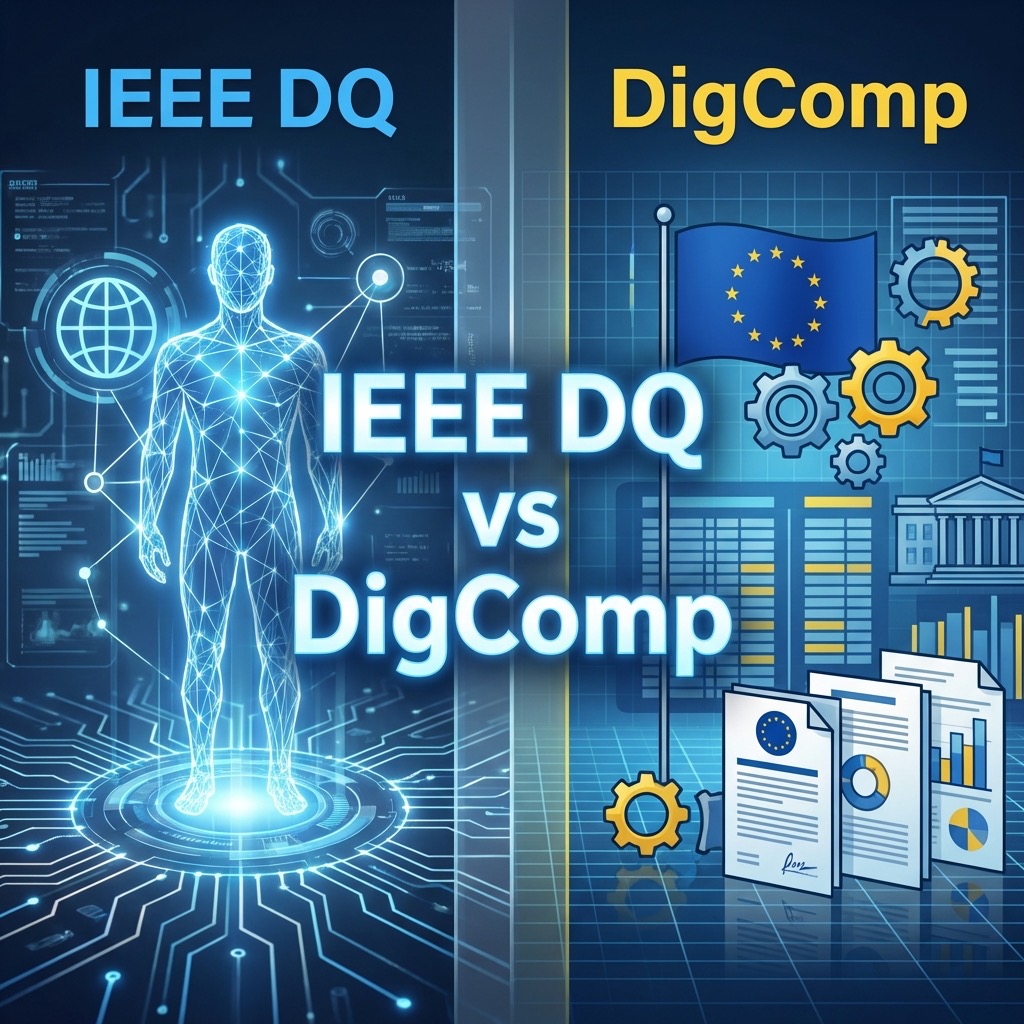
IEEE DQ vs DigComp: เปรียบเทียบสอง Framework ทักษะดิจิทัลระดับโลก
ในยุคที่ AI และเทคโนโลยีดิจิทัลเข้ามาเปลี่ยนแปลงทุกมิติของชีวิต คำถามสำคัญที่องค์กรทั่วโลกต้องเผชิญไม่ใช่แค่ “เราจะใช้เทคโนโลยีอะไร?” แต่คือ “คนของเราพร้อมแค่ไหน?”
และเมื่อพูดถึงการวัดและพัฒนา Digital Competence ในระดับสากล มี 2 Framework หลักที่ถูกพูดถึงมากที่สุดคือ IEEE DQ (Digital Intelligence) จาก DQ Institute ที่สนับสนุนโดย IEEE Standards Association, OECD และ World Economic Forum กับ DigComp (European Digital Competence Framework) จาก European Commission ผ่าน Joint Research Centre
ทั้งสอง Framework นี้มีจุดกำเนิด ปรัชญา และแนวทางการใช้งานที่ต่างกัน แต่ก็มีจุดร่วมที่น่าสนใจ บทความนี้จะพาไปเปรียบเทียบแบบลึกซึ้ง เพื่อให้ท่านตัดสินใจได้ว่าควรเลือกใช้ตัวไหน หรือจะใช้ร่วมกันได้อย่างไร
1. ที่มาและปรัชญาพื้นฐาน
IEEE DQ — Digital Intelligence
IEEE DQ ถูกคิดค้นโดย Dr. Yuhyun Park ในปี 2016 และเผยแพร่ครั้งแรกผ่าน World Economic Forum โดย Framework นี้ถูกพัฒนาจากทีมวิจัยที่หลายมหาวิทยาลัย รวมถึง Nanyang Technological University, National Institute of Education ในสิงคโปร์ และ Iowa State University
จุดเด่นสำคัญคือ DQ ไม่ได้เริ่มจากศูนย์ แต่เป็นการ สังเคราะห์จาก Framework ชั้นนำกว่า 25 ตัว ที่มีอยู่แล้วทั่วโลก ทำให้มีความครอบคลุมสูง
ปี 2018 เกิด Coalition for Digital Intelligence (CDI) ก่อตั้งร่วมกันโดย IEEE Standards Association, DQ Institute และ OECD ร่วมกับ World Economic Forum เพื่อผลักดัน DQ เป็น Global Standard
และในเดือนกันยายน 2020 IEEE 3527.1™ Standard ได้รับการอนุมัติอย่างเป็นทางการจาก IEEE Standards Board ทำให้ DQ กลายเป็น มาตรฐานสากลตัวแรกของโลก ที่เกี่ยวข้องกับ Digital Literacy, Digital Skills และ Digital Readiness
ปรัชญาหลัก: DQ มุ่งเน้น well-being ของปัจเจกบุคคลและสังคม โดยผูกโยงกับ OECD Better Life Initiative และ UN Sustainable Development Goals (SDGs) ทั้ง 17 ข้อ ถือเป็นแนวคิดที่เน้น moral values เป็นฐาน
DigComp — European Digital Competence Framework
DigComp ถูกพัฒนาครั้งแรกในปี 2013 โดย Joint Research Centre (JRC) ของ European Commission ร่วมกับ Directorate-General for Employment, Social Affairs and Inclusion
DigComp ผ่านการพัฒนามาแล้ว 5 เวอร์ชัน:
- DigComp 1.0 (2013) — ฉบับแรก
- DigComp 2.0 (2016) — ปรับ vocabulary และ descriptors
- DigComp 2.1 (2017) — เพิ่ม 8 proficiency levels
- DigComp 2.2 (2022) — เพิ่มกว่า 250 ตัวอย่าง KSA ใหม่ครอบคลุม AI, IoT
- DigComp 3.0 (พฤศจิกายน 2025) — บูรณาการ AI competence ทั้ง framework เพิ่มกว่า 500 learning outcomes
ปรัชญาหลัก: DigComp มุ่งเน้น การใช้เทคโนโลยีดิจิทัลอย่างมั่นใจ วิจารณญาณ และรับผิดชอบ สำหรับการเรียนรู้ การทำงาน และการมีส่วนร่วมในสังคม สะท้อนค่านิยม European Declaration on Digital Rights and Principles (ศึกษาเพิ่มเติมใน DigComp Implementation Guide)
2. โครงสร้าง Framework เปรียบเทียบ
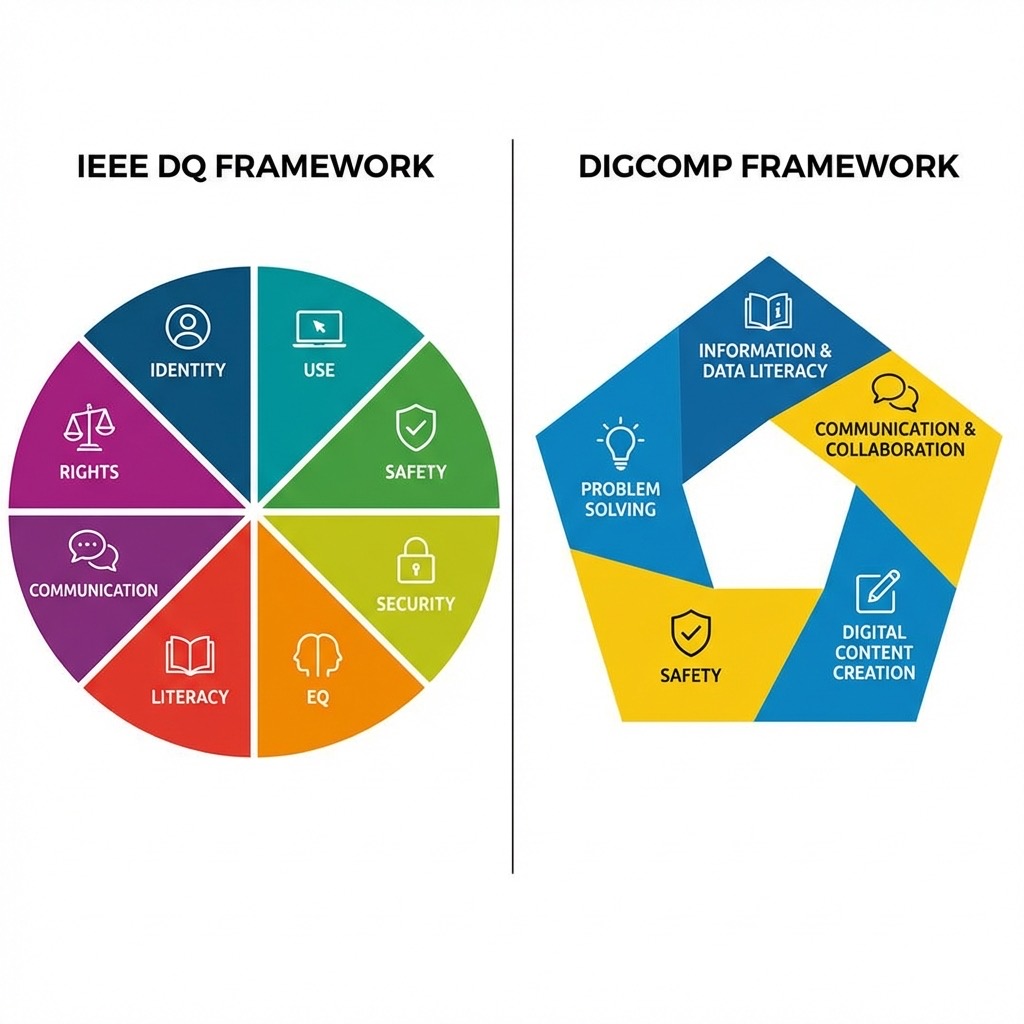
IEEE DQ: 8 Areas × 4 Levels = 32 Competencies
DQ จัดโครงสร้างเป็น matrix ประกอบด้วย 8 ด้านของชีวิตดิจิทัล:
- Digital Identity — การสร้างและจัดการตัวตนดิจิทัล
- Digital Use — การใช้เทคโนโลยีอย่างสมดุลและมีสุขภาพดี
- Digital Safety — การจัดการความเสี่ยงออนไลน์
- Digital Security — การป้องกันข้อมูลและอุปกรณ์
- Digital Emotional Intelligence — ความฉลาดทางอารมณ์ในโลกดิจิทัล
- Digital Literacy — ความรู้เท่าทันสื่อและข้อมูล
- Digital Communication — การสื่อสารและร่วมมือผ่านดิจิทัล
- Digital Rights — สิทธิดิจิทัลและทรัพย์สินทางปัญญา
คูณกับ 4 ระดับประสบการณ์ (เดิม 3 ระดับ เพิ่มล่าสุดปี 2023):
- Level 0: Digital Connectivity — ระดับพื้นฐานสำหรับ inclusive digital transformation (ใหม่)
- Level 1: Digital Citizenship — ใช้เทคโนโลยีอย่างปลอดภัย รับผิดชอบ มีจริยธรรม
- Level 2: Digital Creativity — สร้างความรู้ เนื้อหา และเทคโนโลยีใหม่
- Level 3: Digital Competitiveness — สร้างนวัตกรรมเพื่อเศรษฐกิจดิจิทัล
รวมเป็น 32 competencies (เดิม 24) พร้อมระบบ Global Standard Microcredentials (GSM) สำหรับแต่ละ competency
DigComp: 5 Areas × 4 Proficiency Levels = 21 Competencies
DigComp จัดเป็น 5 ด้าน (Competence Areas):
- Information and Data Literacy — ค้นหา ประเมิน และจัดการข้อมูล
- Communication and Collaboration — สื่อสาร แบ่งปัน มีส่วนร่วมผ่านดิจิทัล
- Digital Content Creation — สร้าง แก้ไข บูรณาการเนื้อหาดิจิทัล
- Safety — ปกป้องอุปกรณ์ ข้อมูลส่วนบุคคล สุขภาพ สิ่งแวดล้อม
- Problem Solving — แก้ปัญหาในสภาพแวดล้อมดิจิทัล
แต่ละด้านมี 21 competencies ทั้งหมด พร้อม 4 proficiency levels (DigComp 3.0):
- Basic (Foundation 1-2)
- Intermediate (3-4)
- Advanced (5-6)
- Highly Advanced (7-8)
DigComp 3.0 เพิ่มจุดเด่นสำคัญคือ การบูรณาการ AI competence ข้ามทุก 21 competencies และ learning outcomes ใหม่กว่า 500 รายการ
3. การประยุกต์ใช้งานจริง
IEEE DQ: จุดแข็งในด้าน Children, Ethics และ Global Measurement
กลุ่มเป้าหมายหลัก: เริ่มจากเด็กและเยาวชน (อายุ 8-18 ปี) ขยายสู่แรงงานและองค์กร
การนำไปใช้ที่โดดเด่น:
- #DQEveryChild Initiative: ร่วมกับ World Economic Forum เข้าถึงเด็กกว่า 600,000 คนใน 30+ ประเทศ (ข้อมูลปี 2018) และขยายสู่ 100 ประเทศผ่านฐานข้อมูลของ Child Online Safety Index (COSI) ในปี 2022 ที่ใช้ข้อมูลจากเด็กและวัยรุ่นกว่า 329,000 คน
- Child Online Safety Index (COSI): ดัชนีวัดความปลอดภัยออนไลน์ของเด็กระดับประเทศ ตัวแรกของโลก
- DQ Seal Certification: ระบบรับรองโปรแกรมที่สอดคล้องกับ IEEE DQ Global Standards
- Powered by DQ: แพลตฟอร์ม AI สำหรับสร้างหลักสูตร AI Literacy ที่ครูและสถาบันสามารถปรับใช้ได้
- DQ Assessment Platform: เครื่องมือวัดและวิเคราะห์ร่วมกับ Singapore SkillsFuture
ตัวอย่างการนำไปใช้ระดับประเทศ: สิงคโปร์ (Ministry of Education + Singtel), เม็กซิโก (Ministry of Public Education), ฟิลิปปินส์ (Globe Telecom + Department of Education), ตุรกี (Turkcell), ไทย (ผ่าน Powered by DQ platform), ซาอุดีอาระเบีย (MCIT)
เหมาะสำหรับ: องค์กรที่ต้องการ framework ที่เน้น ethical foundation, child safety, และ global benchmarking
DigComp: จุดแข็งในด้าน Policy, Education และ Employment
กลุ่มเป้าหมายหลัก: พลเมืองทุกกลุ่มอายุ ตั้งแต่นักเรียนจนถึงผู้สูงอายุ
การนำไปใช้ที่โดดเด่น:
- Digital Economy and Society Index (DESI): DigComp เป็นพื้นฐานของ Digital Skills Indicator ที่ใช้วัดทักษะดิจิทัลของประชากร EU ทุกปี — เป้าหมาย 80% ของประชากรมีทักษะดิจิทัลขั้นพื้นฐานภายในปี 2030
- Europass CV: ผู้หางานสามารถประเมินตนเองตาม DigComp แล้วใส่ใน CV ได้
- ESCO (European Skills Classification): DigComp ถูกรวมเข้าไปใน skills pillar ของ ESCO เพื่อเชื่อมต่อกับตลาดแรงงาน
- 27 Digital Skills Certification Schemes ใน 25 ประเทศใช้ DigComp เป็นฐาน
- ICDL (International Computer Driving Licence): mapped กับ DigComp ทั้งจากภายในและจากการวิจัยอิสระโดย UNESCO และ UNICEF
- DigCompEdu: Framework แยกสำหรับนักการศึกษาโดยเฉพาะ
- DigCompOrg: Framework สำหรับองค์กรการศึกษาที่ต้องการ digital transformation
ตัวอย่างการนำไปใช้ระดับประเทศ: ออสเตรีย (DigComp 2.3 AT เวอร์ชันภาษาเยอรมัน), สเปน (Basque Country ใช้สำหรับ policy), โปแลนด์ (Ministry of Development ใช้เป็น catalogue ของ EU-funded trainings), ออสเตรเลีย (Australian Digital Capability Framework ดัดแปลงจาก DigComp)
เหมาะสำหรับ: องค์กรที่ต้องการ framework ที่มี policy backing แข็งแกร่ง, ต้องการเชื่อมกับระบบ EU, และเน้น workforce development
4. ตัวชี้วัดและการวัดผล (Evaluation Metrics)
IEEE DQ
| ตัวชี้วัด | รายละเอียด |
|---|---|
| DQ Score | คะแนนรวมจากการประเมิน 8 ด้าน ใช้เปรียบเทียบกับค่าเฉลี่ยระดับประเทศและโลก |
| DQ Index | ดัชนีระดับประเทศ ติดตามความก้าวหน้าของทักษะดิจิทัลทั่วโลก |
| COSI (Child Online Safety Index) | วัดความปลอดภัยออนไลน์ของเด็ก 6 มิติ |
| DQ Seal | การรับรองว่าโปรแกรมสอดคล้องกับ IEEE DQ Global Standards |
| GSM (Global Standard Microcredentials) | ระบบ micro-certification สำหรับแต่ละ competency |
วิธีการวัด: DQ Assessment Platform ใช้ web/mobile-based assessment ที่รวมเครื่องมือจากหลายแหล่ง ใช้ AI-based linking and prediction methodology เชื่อมโยงผลประเมินกับ global benchmark ข้อมูลทั้งหมดรวมอยู่ใน Global DQ Databank
DigComp
| ตัวชี้วัด | รายละเอียด |
|---|---|
| Proficiency Levels (4 ระดับ) | Basic, Intermediate, Advanced, Highly Advanced |
| DESI Digital Skills Indicator | ใช้ข้อมูลจาก Eurostat survey วัดทักษะดิจิทัลของประชากร EU |
| DigCompSat | เครื่องมือ self-assessment สำหรับพลเมือง |
| Learning Outcomes (500+) | ใน DigComp 3.0 มี learning outcomes ที่วัดได้ชัดเจนสำหรับทุก competency |
| National Certification Schemes | 27 schemes ใน 25 ประเทศ |
วิธีการวัด: DigComp ใช้ทั้ง self-assessment, knowledge tests และ performance-based assessment หลากหลายเครื่องมือ ข้อมูลระดับประเทศถูกรวบรวมผ่าน Eurostat Survey on Internet Usage ครอบคลุมตัวอย่างประชากร EU อายุ 16-74 ปี
เปรียบเทียบจุดเด่นด้าน Metrics
| มิติ | IEEE DQ | DigComp |
|---|---|---|
| Global Benchmark | ✅ DQ Index เทียบระดับโลก | ⚠️ เน้น EU แต่ขยายออกนอก EU บ้าง |
| Real-time Tracking | ✅ COSI อัปเดตแบบ real-time | ❌ DESI เป็นรายปี |
| Micro-credentials | ✅ GSM สำหรับทุก competency | ⚠️ กำลังพัฒนา European Digital Competence Certificate |
| Self-assessment | ✅ DQ Test (เด็ก) + DQ Assessment (องค์กร) | ✅ DigCompSat + เครื่องมือระดับชาติ |
| Policy Integration | ⚠️ ใช้กับ SDGs/OECD | ✅ ฝังลึกในนโยบาย EU (DESI, Europass, ESCO) |
| Psychometric Validation | ✅ NTU IRB approved | ✅ หลายงานวิจัยยืนยัน (Cronbach’s α 0.87+) |
5. ระดับ Maturity ของแต่ละ Framework
IEEE DQ: Maturity Timeline
| ปี | เหตุการณ์สำคัญ |
|---|---|
| 2016 | Dr. Yuhyun Park เสนอ DQ concept ผ่าน World Economic Forum |
| 2017 | เปิดตัว #DQEveryChild ระดับโลก ขยายสู่ 30+ ประเทศ |
| 2018 | ก่อตั้ง Coalition for Digital Intelligence (CDI) โดย IEEE SA + OECD + DQ Institute |
| 2019 | DQ Global Standards Report เผยแพร่ |
| 2020 | IEEE 3527.1™ Standard ได้รับการอนุมัติ + เปิดตัว COSI |
| 2023 | เพิ่ม Level 0: Digital Connectivity + GSM Microcredentials (32 competencies) |
| 2024-2025 | เปิดตัว Powered by DQ (AI-enabled platform) สำหรับสร้าง AI Literacy |
อายุ Framework: ~9 ปี (2016-2025) สถานะ: IEEE Standard ที่ได้รับการรับรอง — ถือว่า mature ในระดับ standard แต่ยังอยู่ในช่วง scaling adoption โดยเฉพาะนอกภาคการศึกษา
DigComp: Maturity Timeline
| ปี | เหตุการณ์สำคัญ |
|---|---|
| 2005 | เริ่มโครงการ “Learning and Skills for the Digital Era” |
| 2013 | DigComp 1.0 เผยแพร่ |
| 2016 | DigComp 2.0 — ปรับ conceptual model |
| 2017 | DigComp 2.1 — เพิ่ม 8 proficiency levels |
| 2022 | DigComp 2.2 — เพิ่ม 250+ ตัวอย่าง KSA รวม AI, IoT |
| 2025 (พ.ย.) | DigComp 3.0 — บูรณาการ AI ทั้ง framework, 500+ learning outcomes |
อายุ Framework: ~12 ปี (2013-2025) หรือ ~20 ปี หากนับจากโครงการต้นกำเนิด สถานะ: Highly mature — ผ่าน 5 iterations, มี extensive validation, แปลเป็น 20+ ภาษา, ฝังลึกในนโยบาย EU
สรุป Maturity
| มิติ | IEEE DQ | DigComp |
|---|---|---|
| อายุ | 9 ปี | 12+ ปี |
| จำนวน Iterations | 2 (v1.0 → v2.0 with Connectivity) | 5 (1.0 → 3.0) |
| Standards Body | IEEE (global) | EU Commission / JRC |
| Research Base | 25+ frameworks synthesized | Extensive academic validation |
| Stability | ปรับโครงสร้างหลัก 1 ครั้ง (เพิ่ม level) | โครงสร้างคงที่ตั้งแต่ 2.0 |
| Maturity Level | 🟡 Established Standard, Growing Adoption | 🟢 Fully Mature, Deep Integration |
6. การนำไปใช้ทั่วโลก: ตัวเลขเปรียบเทียบ
IEEE DQ — Global Reach
| ตัวชี้วัด | จำนวน |
|---|---|
| ประเทศที่เข้าถึง (COSI 2022) | 100 ประเทศ |
| เด็กและวัยรุ่นที่ถูกสำรวจ | 329,000+ คน (2022), 351,000+ คน (2023) |
| องค์กรพันธมิตร | 100+ องค์กร (ผ่าน #DQEveryChild + CDI) |
| พันธมิตรหลัก | Google, Twitter, UNICEF, Singtel, Turkcell, TikTok, LEGO, JA Worldwide, World Bank |
| ภาครัฐที่นำไปใช้ | สิงคโปร์, เม็กซิโก, ซาอุดีอาระเบีย, ฟิลิปปินส์, ไนจีเรีย, คีร์กีซสถาน |
| ฐานที่มั่นหลัก | สิงคโปร์ (HQ) + เอเชีย |
DigComp — EU-centric with Global Influence
| ตัวชี้วัด | จำนวน |
|---|---|
| EU Member States ที่ adopt | 22+ ประเทศ |
| Digital Skills Certification Schemes | 27 schemes ใน 25 ประเทศ |
| ภาษาที่แปล | 20 ภาษาจาก 24 ภาษาทางการ EU |
| Community of Practice | ~400 สมาชิกจาก 48 ประเทศ |
| ผู้เชี่ยวชาญที่มีส่วนร่วม (DigComp 3.0) | 300+ คน |
| ประชากรที่ถูกวัด (ผ่าน DESI) | ~450 ล้านคน (EU population 16-74) |
| ฐานที่มั่นหลัก | ยุโรป + ขยายสู่ออสเตรเลีย, ละตินอเมริกา |
Industry vs Government Adoption
| ภาค | IEEE DQ | DigComp |
|---|---|---|
| ภาครัฐ | ⭐⭐⭐ (หลายประเทศในเอเชีย, ละตินอเมริกา) | ⭐⭐⭐⭐⭐ (EU policy backbone) |
| ภาคการศึกษา | ⭐⭐⭐⭐ (K-12 โดยเฉพาะ) | ⭐⭐⭐⭐ (ทุกระดับ K-12 ถึง higher ed) |
| ภาคเอกชน/อุตสาหกรรม | ⭐⭐⭐ (ผ่าน DQ Seal + telcos) | ⭐⭐ (45% ใช้ตามรายงาน CEPIS 2021) |
| องค์กรระหว่างประเทศ | ⭐⭐⭐⭐ (IEEE, OECD, WEF, UNDP) | ⭐⭐⭐⭐ (EU, UNESCO, OECD) |
ข้อมูลที่น่าสนใจจากรายงาน CEPIS ปี 2021 พบว่า 77% ของประเทศที่ตอบแบบสำรวจรับรู้ว่ารัฐบาลใช้ DigComp, 50% ใช้ในภาคการศึกษา แต่เพียง 45% เท่านั้นที่ใช้ในภาคอุตสาหกรรม แสดงให้เห็นว่า DigComp ยังมี gap ในภาคเอกชน ซึ่งเป็นจุดที่ IEEE DQ พยายามเข้ามาเติมเต็มผ่านระบบ DQ Seal และ Powered by DQ
7. ใช้ร่วมกันได้ไหม? — Complementary Framework Approach
คำตอบสั้นๆ คือ ได้ — และควรทำด้วยซ้ำ
ทำไมทั้งสองถึงเสริมกัน ไม่ใช่แทนที่กัน
IEEE DQ ถูกออกแบบมาเป็น “meta-framework” ที่สังเคราะห์จาก 25+ frameworks ทั่วโลก รวมถึง DigComp ด้วย DQ จึงทำหน้าที่เป็นเหมือน “ภาษากลาง” (lingua franca) ที่แปลง competencies จาก framework หนึ่งไปอีก framework ได้
ตามคำอธิบายของ DQ Institute เอง:
“Just like how the SWIFT code facilitates inter-banking transactions, the IEEE DQ Global Standards can serve as the interoperable common language that translates competencies in one framework to match to another’s.”
นั่นหมายความว่า DQ ไม่ได้มาแทนที่ DigComp แต่ทำหน้าที่เป็น interoperability layer ที่เชื่อมต่อ framework ต่างๆ เข้าด้วยกัน
แนวทางการใช้ร่วมกัน
Scenario 1: องค์กรในยุโรปที่ต้องการ Global Benchmark
- ใช้ DigComp เป็น framework หลักสำหรับ policy compliance และ EU reporting
- ใช้ DQ Index เพื่อเปรียบเทียบกับค่าเฉลี่ยระดับโลก (ไม่เฉพาะ EU)
Scenario 2: องค์กรในเอเชียที่ต้องการ Certification + EU Recognition
- ใช้ IEEE DQ เป็นมาตรฐานหลักสำหรับ assessment และ certification
- map ผลลัพธ์กับ DigComp เพื่อให้ได้ recognition ในตลาด EU
Scenario 3: โรงเรียนที่ต้องการทั้ง Child Safety + Digital Skills
- ใช้ DQ #DQEveryChild สำหรับ digital citizenship และ online safety (จุดแข็ง DQ)
- ใช้ DigComp สำหรับ curriculum development ด้าน content creation และ problem solving
Scenario 4: Multinational Corporation
- ใช้ IEEE DQ GSM เป็น coding system กลางสำหรับ digital skills taxonomy
- map กับ DigComp สำหรับพนักงานในยุโรป และ national frameworks อื่นๆ สำหรับภูมิภาคอื่น
Mapping ที่เป็นไปได้
| DQ Area | DigComp Competence Area ที่เกี่ยวข้อง |
|---|---|
| Digital Literacy | 1. Information and Data Literacy |
| Digital Communication | 2. Communication and Collaboration |
| Digital Identity + Rights | 3. Digital Content Creation (บางส่วน) |
| Digital Safety + Security | 4. Safety |
| Digital Use + Emotional Intelligence | 5. Problem Solving (บางส่วน) |
หมายเหตุ: DQ มีด้าน Emotional Intelligence, Identity, Rights ที่ DigComp ไม่ได้ cover ตรงๆ ขณะที่ DigComp มี Content Creation และ Problem Solving ที่ละเอียดกว่า
8. จุดแข็ง-จุดอ่อนเปรียบเทียบ
IEEE DQ
จุดแข็ง:
- ✅ เป็น IEEE Standard ระดับสากล — ไม่ผูกกับภูมิภาคใดภูมิภาคหนึ่ง
- ✅ ครอบคลุมด้าน Emotional Intelligence และ Ethics ที่ Framework อื่นมักขาด
- ✅ มี Global Benchmark (DQ Index) เทียบข้ามประเทศได้
- ✅ โปรแกรม child online safety ที่แข็งแกร่ง (COSI, DQWorld)
- ✅ ระบบ Microcredentials (GSM) ที่ interoperable
- ✅ AI-powered certification system ทันสมัย
จุดอ่อน:
- ❌ ยังไม่ฝังลึกในนโยบายภาครัฐเท่า DigComp
- ❌ ข้อมูลการ adopt ในภาคเอกชนยังจำกัด
- ❌ เครื่องมือ assessment ส่วนใหญ่ต้องผ่าน DQ Institute
- ❌ Academic validation น้อยกว่า DigComp ที่มีงานวิจัยรองรับมาก
DigComp
จุดแข็ง:
- ✅ ฝังลึกในนโยบาย EU — DESI, Europass, ESCO, Digital Decade
- ✅ ผ่าน 5 iterations ความ stable สูงมาก โครงสร้างไม่เปลี่ยน
- ✅ Academic validation เข้มข้น มีงานวิจัย psychometric หลายชิ้น
- ✅ แปล 20+ ภาษา เข้าถึงง่าย
- ✅ Open access — ทุกคนเข้าถึงได้ฟรี ไม่มี paywall
- ✅ DigComp 3.0 บูรณาการ AI competence ทั้ง framework
จุดอ่อน:
- ❌ เน้นยุโรปเป็นหลัก — การ adopt นอก EU ยังจำกัด
- ❌ ขาดด้าน Emotional Intelligence และ Digital Identity ที่ชัดเจน
- ❌ ไม่มี global index เทียบข้ามภูมิภาค (DESI เฉพาะ EU)
- ❌ การนำไปใช้ในภาคเอกชนยังต่ำ (45% จากรายงาน CEPIS)
- ❌ DigComp 3.0 เพิ่งเปิดตัว ยังต้องรอการ adopt
9. สรุปตารางเปรียบเทียบ
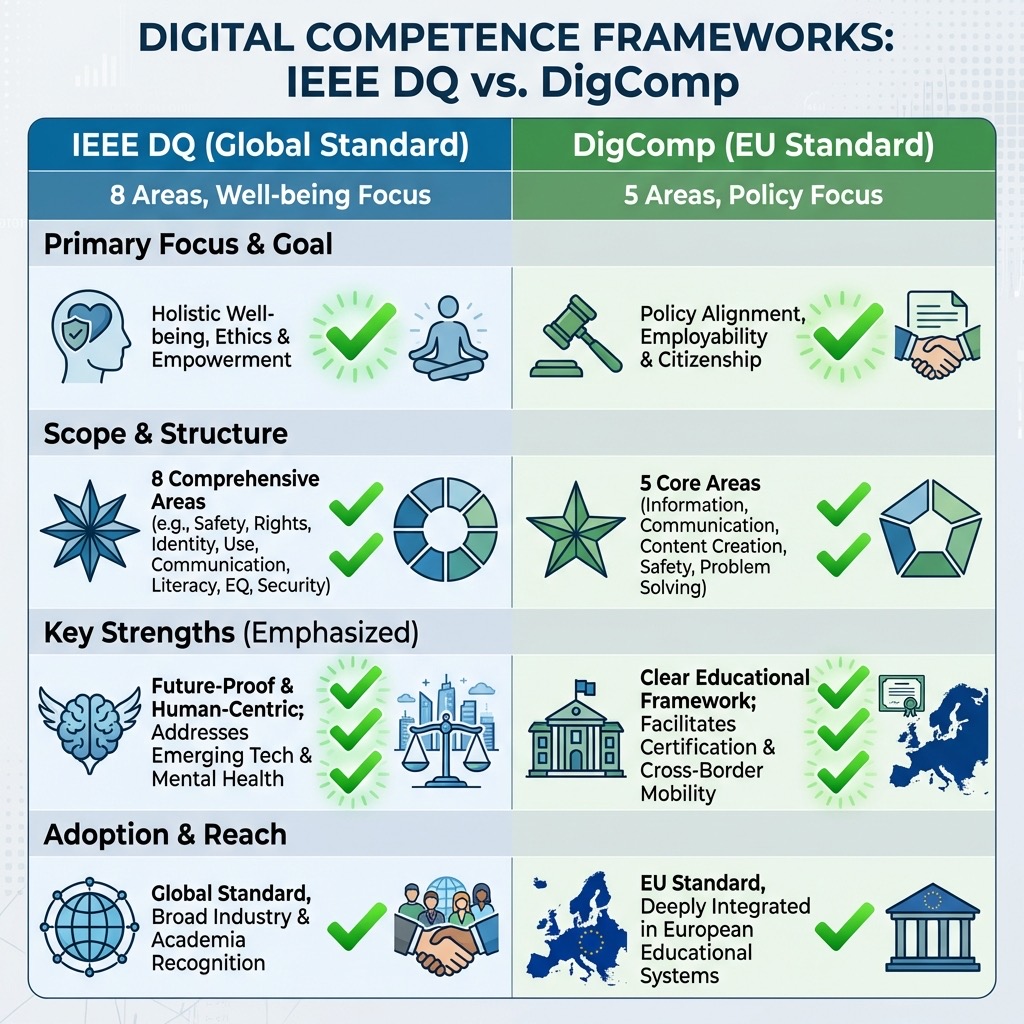
| มิติ | IEEE DQ | DigComp |
|---|---|---|
| ผู้พัฒนา | DQ Institute + IEEE SA | EU Commission / JRC |
| ปีเริ่มต้น | 2016 | 2013 |
| เวอร์ชันล่าสุด | v2.0 (2023, +Connectivity level) | v3.0 (พ.ย. 2025) |
| Standard Body | IEEE 3527.1™ | EU Reference Framework |
| จำนวน Competencies | 32 (8 areas × 4 levels) | 21 (5 areas × 4 proficiency levels) |
| Proficiency Levels | 4 (Connectivity → Competitiveness) | 4 (Basic → Highly Advanced) |
| เป้าหมายหลัก | Well-being + SDGs | Policy + Workforce + Education |
| กลุ่มเป้าหมาย | เด็ก → ผู้ใหญ่ → องค์กร | พลเมืองทุกกลุ่มอายุ |
| จุดเด่นเฉพาะ | Emotional Intelligence, Ethics, Child Safety | Content Creation, Problem Solving, AI Integration |
| Assessment | DQ Test, DQ Index, DQ Seal | DESI, DigCompSat, National Schemes |
| ประเทศที่นำไปใช้ | 100+ (ผ่าน COSI) | 22+ EU + 25+ (certifications) |
| ภาษาที่รองรับ | หลายภาษา (ผ่าน partners) | 20+ ภาษา EU |
| Interoperability | GSM Microcredentials | ESCO, Europass, JSON-LD |
| Cost | บางส่วนฟรี, บางส่วนต้องร่วมมือ | Open access ทั้งหมด |
| AI Integration | ระดับ tool (Powered by DQ) | ระดับ framework (DigComp 3.0) |
10. ข้อเสนอแนะ: ใครควรใช้อะไร?
เลือก IEEE DQ ถ้า…
- 🎯 องค์กรของคุณทำงานกับ เด็กและเยาวชน และต้องการ child online safety framework
- 🌏 ต้องการ global benchmark ที่ไม่จำกัดเฉพาะภูมิภาคใด
- 🤝 ต้องการ interoperable standard ที่เชื่อมหลาย framework เข้าด้วยกัน
- 💡 เน้น ethical foundation และ emotional intelligence ในการพัฒนาทักษะ
- 📊 ต้องการ certification system (DQ Seal) สำหรับโปรแกรมของคุณ
เลือก DigComp ถ้า…
- 🇪🇺 องค์กรของคุณทำงานในหรือกับ ตลาดยุโรป และต้องการ EU compliance
- 📋 ต้องการ framework ที่ ฝังลึกในนโยบาย และมี regulatory backing
- 🎓 เน้น curriculum development สำหรับการศึกษาทุกระดับ
- 👥 ต้องการ workforce development ที่เชื่อมกับ employment systems
- 📖 ต้องการ framework ที่ open access และมี extensive documentation
เลือกใช้ทั้งคู่ถ้า…
- 🌐 เป็น multinational organization ที่ทำงานข้ามภูมิภาค
- 🔗 ต้องการ comprehensive coverage ทั้งด้าน technical skills และ socio-emotional skills
- 📈 ต้องการทั้ง EU policy alignment และ global benchmarking
- 🏫 เป็นสถาบันการศึกษาที่ต้องการทั้ง child safety (DQ) และ digital curriculum (DigComp)
สำหรับผู้บริหารระดับสูงที่ต้องการวางกลยุทธ์ AI ในภาพรวม สามารถอ่าน GenAI Use Cases สำหรับ CEO เพื่อเชื่อมโยงทักษะคนเข้ากับ ROI ของธุรกิจ
สรุปท้าย: ไม่ใช่ “เลือกข้างเดียว” แต่คือ “ใช้ให้ถูกงาน”
IEEE DQ และ DigComp ไม่ได้เป็นคู่แข่งกัน แต่เป็น คู่เสริม ที่มองทักษะดิจิทัลจากมุมต่างกัน
DQ มองจากมุม “คนเราต้องเป็นอย่างไรในโลกดิจิทัล” — เน้น identity, ethics, emotional intelligence, well-being ส่วน DigComp มองจากมุม “คนเราต้องทำอะไรได้ในโลกดิจิทัล” — เน้น skills, knowledge, practical competence
ในยุค AI ที่เทคโนโลยีเปลี่ยนแปลงเร็วกว่าที่ระบบการศึกษาจะตามทัน ทั้ง “being” และ “doing” สำคัญพอๆ กัน องค์กรที่ฉลาดจะไม่เลือกแค่ตัวใดตัวหนึ่ง แต่จะ ใช้ทั้งคู่ในจุดที่แต่ละตัวเก่งที่สุด
❓ FAQ Section
1. IEEE DQ และ DigComp มาตรฐานไหน “ยาก” กว่ากัน?
DigComp มีความลึกด้าน Technical Skills (เช่น Content Creation) ที่เน้นความเชี่ยวชาญ 8 ระดับ ส่วน DQ มีความกว้างด้าน Socio-emotional (ความฉลาดทางอารมณ์) และจริยธรรมที่เข้มข้นกว่า ทั้งคู่สร้างมาเพื่อจุดประสงค์ที่ต่างกันมากกว่าความยากง่าย
2. องค์กรในไทยควรเลือกมาตรฐานไหน?
หากเน้นการวัดผลระดับสากลเทียบกับ 100+ ประเทศทั่วโลก IEEE DQ จะมี DQ Index ให้เปรียบเทียบ แต่หากเป็นการทำหลักสูตรพัฒนาคนทำงานที่อ้างอิงมาตรฐานสากลที่นิยมนิยมที่สุด DigComp จะมี Resources และ Tutorial ให้เลือกใช้มากกว่า
3. มาตรฐานเหล่านี้นำไปประยุกต์ใช้กับ AI ได้อย่างไร?
ทั้งคู่ปัจจุบันบูรณาการ AI เข้าไปแล้ว โดย DQ จะมี “AI Literacy” เป็นส่วนหนึ่งของ Digital Competitiveness ส่วน DigComp 3.0 ได้กระจายทักษะ AI เข้าไปในทุกหัวข้อ (AI-infusion)
💡 Key Takeaways
- Interoperability is Key: DQ Institute ออกแบบมาให้ DQ เป็น “Meta-framework” ที่แปลงค่าไปยังมาตรฐานอื่นได้ (เหมือนรหัส SWIFT ของธนาคาร)
- Being vs. Doing: DQ เน้นว่าเราควร “เป็น” อย่างไรในโลกดิจิทัล (Ethics/Identity) ส่วน DigComp เน้นว่าเราต้อง “ทำ” อะไรเป็นบ้าง (Competence/Tasks)
- Micro-credentials Maturity: ทั้งคู่กำลังมุ่งไปสู่ระบบใบเซอร์ขนาดเล็ก (Micro-credentials) เพื่อให้ตลาดแรงงานรับรองทักษะได้จริง
🇬🇧 English Summary: IEEE DQ vs. DigComp Strategic Comparison
The Battle for Digital Standards
As the global economy shifts towards an AI-first paradigm, the primary challenge for organizations is no longer technology acquisition but human readiness. This article provides a strategic comparison of the two most prominent digital competence frameworks: the IEEE 3527.1™ DQ (Digital Intelligence) and the European DigComp (Digital Competence Framework).
Philosophical Foundations
- IEEE DQ: Synthesized from 25+ existing frameworks, DQ emphasizes individual and societal well-being. It is the first global standard recognized for digital literacy, with a heavy focus on ethics and socio-emotional intelligence.
- DigComp: Now in its 3.0 version, this framework focuses on the confident and critical use of technology for learning and work within the EU policy landscape, emphasizing structural competence.
Structural Differences
- IEEE DQ (8 Areas x 4 Levels): Covers Identity, Use, Safety, Security, EQ, Literacy, Communication, and Rights. It excels in children’s safety and global benchmarking via the DQ Index.
- DigComp (5 Areas x 8 Levels): Focuses on Information & Data Literacy, Communication & Collaboration, Content Creation, Safety, and Problem Solving. Its strength lies in deep policy integration and workforce development.
Implementation and Metrics
The article highlights that these frameworks are complementary rather than competitive. IEEE DQ acts as a “meta-framework” or an interoperability layer (similar to the SWIFT code for banking) that can translate competencies across different standards.
- Organizations should use DigComp for EU compliance and curriculum planning.
- Leaders should use IEEE DQ for global benchmarking and ethical alignment.
Conclusion for 2026 and Beyond
With DigComp 3.0 explicitly infusing AI competencies and IEEE DQ launching AI-powered platforms (“Powered by DQ”), both frameworks are now optimized for the generative AI era. The ultimate strategy for a multinational or forward-thinking local entity is to utilize both: DQ for the “Human Being” (Identity and Ethics) and DigComp for the “Digital Doing” (Technical Competence).
References:
- IEEE 3527.1-2020 Standard for Digital Intelligence (DQ) — IEEE Standards Association
- DigComp 3.0: European Digital Competence Framework — JRC, European Commission (2025)
- DQ Global Standards Report 2019 — DQ Institute
- DigComp 2.2: The Digital Competence Framework for Citizens — Vuorikari, R., Kluzer, S., Punie, Y. (2022)
- Child Online Safety Index (COSI) 2022 — DQ Institute
- DESI 2025 Methodological Note — European Commission
- Awareness of the DigComp framework — CEPIS Survey (2021)
- Digital Competence Frameworks Database — UNESCO-UNEVOC
- DQ Institute Official Website — dqinstitute.org
- DigComp Framework Official — joint-research-centre.ec.europa.eu